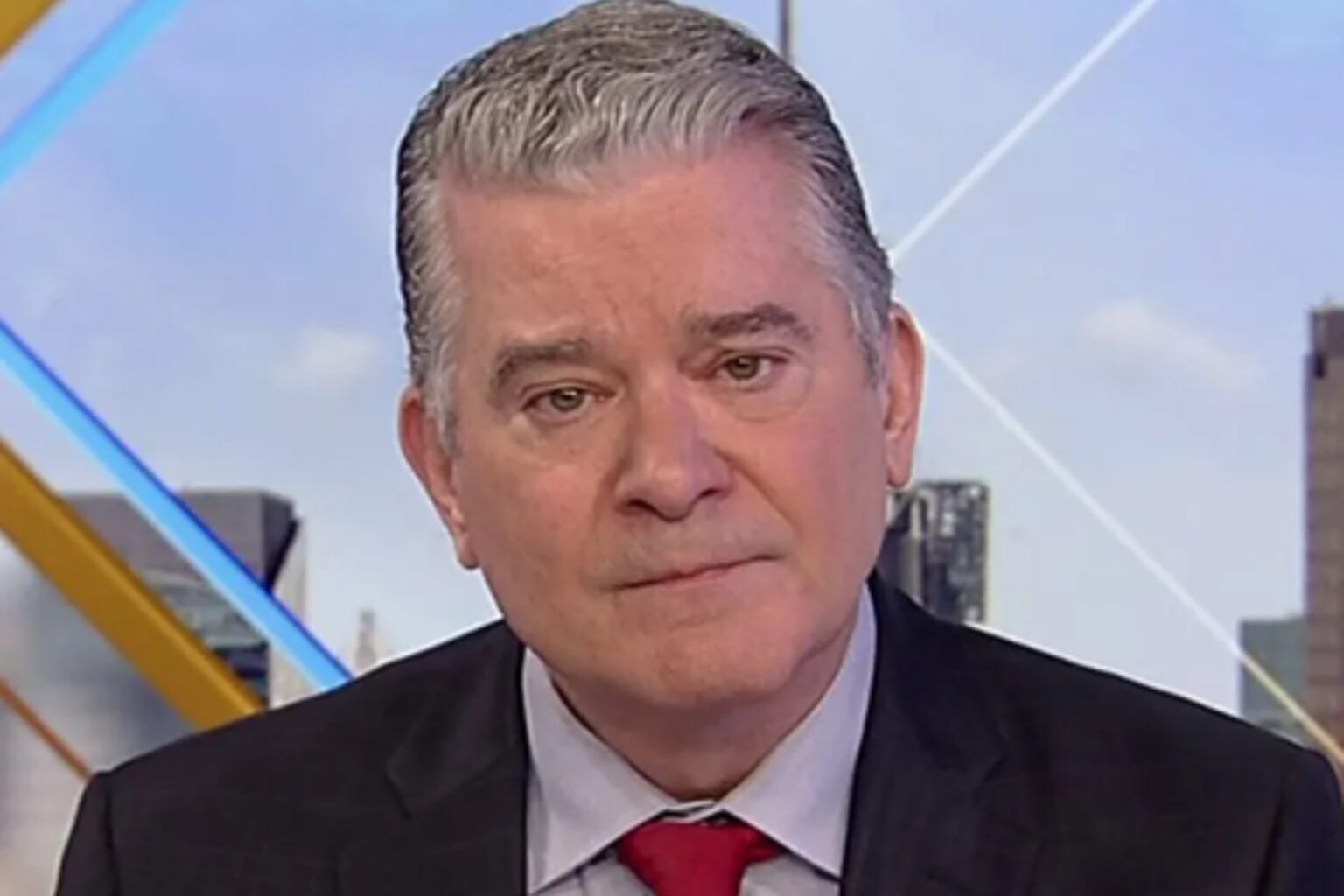
Paul J Mauro — Before the Cameras, There Was the Rubble
On the morning of September 11, 2001, Inspector Paul J Mauro didn’t wait for orders. He went to Ground Zero. While smoke still poured from the collapsed towers, while sirens layered over screams and the air tasted like burning metal and ash, he was already there — coordinating, assessing, doing the work that nobody had trained for because nothing like it had ever happened before.
Two decades later, he sits in a television studio explaining criminal justice to millions of Fox News viewers. The studio is clean. The lighting is controlled. Nobody’s screaming. But every opinion he delivers on air traces a direct line back to that smoke-choked morning in lower Manhattan, and to twenty-three years of decisions made under pressure that most people will never face.
Paul J Mauro is one of those rare figures who actually did the thing before he started talking about it.
Quick Facts
| Detail | Information |
| Full Name | Paul J Mauro |
| Born | Circa 1965, New York City |
| Heritage | Italian-American |
| Education | Elizabethtown University (B.A.); Kutztown University (M.Ed.); Harvard Kennedy School (MPA); Fordham Law School (J.D.) |
| NYPD Career | 1987–2010 (23 years); retired as Inspector |
| Key Commands | Legal Bureau; Intelligence Operations & Analysis Bureau; Counterterrorism Bureau |
| Post-NYPD | Attorney, DeMarco Law PLLC |
| Media | Fox News / Fox Business contributor (joined 2024); The Ops Desk Substack |
| Teaching | Adjunct Professor, John Jay College of Criminal Justice |
| Book | The NYPD’s War on Terror: The True Story of the 9/11 Intelligence Revolution (2010) |
| Family | Married to Linda; children Nicolás and Bianca |
| Est. Net Worth | ~$2–3 million (estimate) |
A New York Childhood Built on Faith and Concrete
Long before he had a badge or a law degree, Paul J Mauro had a neighborhood. He grew up in New York City inside a large, close-knit Italian-American Catholic family — the kind of household where Sunday dinners ran long, loyalty was expected, and faith wasn’t a subject but a framework.
Catholic school shaped him early. The emphasis on duty, moral accountability, and service wasn’t just classroom philosophy — it was daily life. He watched police officers patrolling his block and felt something that many kids feel but most eventually abandon: a genuine pull toward that kind of work. For Mauro Icardi
He didn’t stumble into law enforcement. He walked toward it with his eyes open, propelled by values absorbed before he was old enough to articulate them. The city he grew up in — complex, loud, unequal, alive — gave him something that no classroom ever could: a clear picture of what was actually at stake.
The Turning Point: An Education Nobody Expected
What separates Paul J Mauro from most cops, and from most television analysts, is what he did with his time while he was doing everything else.
He started his higher education at Elizabethtown University in Pennsylvania, earning a bachelor’s degree in what at first sounds like an odd combination — accounting and psychology. But the pairing reveals a mind that thinks precisely and humanistically at once. Numbers tell you what happened; psychology tells you why. For an investigator, that’s not a quirk. That’s an advantage.
He continued at Kutztown University, completing a master’s in education — a degree that quietly foreshadowed the teaching career that would come decades later. Then came Harvard’s Kennedy School of Government, where he earned a Master of Public Administration, sharpening his understanding of intelligence, public policy, and the institutional machinery that either prevents disasters or makes them worse. Finally, Fordham Law School awarded him his Juris Doctor.
Four institutions. Five degrees. All of it pursued while he was actively working one of the most demanding law enforcement jobs in the country. That’s not a résumé. That’s a philosophy.
The Career: From a Beat Cop’s Shoes to the Counterterrorism Bureau
Paul J Mauro joined the New York Police Department in 1987 as a patrol officer. He was in his early twenties, working city streets, learning the fundamentals the only way they can actually be learned — by doing them.
Over the next two decades, he climbed through the NYPD’s ranks with a consistency that reflected both ability and discipline. He eventually commanded three of the department’s most demanding bureaus. The Legal Bureau put him at the intersection of police operations and constitutional law, advising on everything from courtroom procedure to conduct on the street. The Intelligence Operations and Analysis Bureau was the post-9/11 nerve center — the place where raw information from across the globe got processed into actionable security decisions. The Counterterrorism Bureau was exactly what it sounds like: the frontline of protecting America’s largest city from the next attack.
His first real brush with terrorism came in 1993, when bombs ripped through the World Trade Center’s underground garage, killing six people and injuring more than a thousand others. That attack exposed gaps in American intelligence that nobody wanted to admit existed. Mauro absorbed the lessons. When a far larger attack came eight years later, he was ready — or at least as ready as anyone could be for something nobody had seen before.
On September 11, 2001, he was deployed to Ground Zero. He worked through the chaos and the grief with the same discipline he’d been building for fourteen years. The experience didn’t just shape his career — it became the foundation for everything he would later write, teach, and say publicly about American security.
His work extended well beyond New York. He briefed members of Congress on intelligence matters. He collaborated with the CIA, the Department of Homeland Security, Interpol, and Europol — building the international partnerships that post-9/11 counterterrorism required. He served as a speechwriter for NYPD leadership and represented the department on a Department of Homeland Security advisory committee under President George W. Bush.
One of those commands produced a specific landmark: under his leadership, the NYPD applied New York State’s counter-terrorism statutes for the first time. He also pursued enterprise corruption cases under RICO, and prosecuted terrorism-related money laundering — work that required both the street instincts of a seasoned detective and the legal precision of someone who understood exactly how far the law could stretch.
He retired from the NYPD in 2010 after twenty-three years. He left as an inspector, one of the department’s senior ranks. He left on his own terms.
After the Badge: Law, the Classroom, and the Written Word
Retirement from the NYPD was not retirement from work. Mauro joined DeMarco Law PLLC as an attorney, applying his Fordham credentials and NYPD expertise to private practice. His focus areas included corporate investigations, regulatory compliance, anti-piracy law, electronic surveillance issues, and the complex legal terrain emerging from new technology regulations. For clients navigating compliance in an era when digital evidence and data security had become central to both business and crime, he brought something rare — he’d seen the other side of these issues from inside the department doing the investigating.
He simultaneously stepped into the classroom at John Jay College of Criminal Justice in Manhattan, one of the country’s premier institutions dedicated specifically to law enforcement education. As an adjunct professor, he didn’t teach from textbooks alone. He taught from experience — the kind gained by managing two hundred intelligence analysts, or by standing at Ground Zero while the fire still burned.
In 2010, the same year he retired from the NYPD, he co-authored The NYPD’s War on Terror: The True Story of the 9/11 Intelligence Revolution — an insider’s account of how New York’s police department rebuilt its intelligence infrastructure from the wreckage of that September morning. The book didn’t flinch. It documented mistakes alongside successes, policy failures alongside genuine courage. It remains one of the most authoritative accounts of how American urban policing changed after 9/11.
He also began writing columns for the New York Post, the Wall Street Journal, the Washington Times, and FoxNews.com — explaining policing, law, and security to readers who didn’t have his twenty-three years of context. He launched The Ops Desk, a Substack newsletter where he publishes detailed analysis on cases and controversies the mainstream media often mishandles.
In 2024, he officially joined Fox News and Fox Business Network as a legal and criminal justice contributor. The television career was built on something that most television careers aren’t: actual credibility.
Personal Life: The Family Behind the Career
Paul J Mauro is married to Linda. They’ve built a family together in New York City, raising a son named Nicolás and a daughter named Bianca. He keeps the details of his personal life deliberately private — a choice that anyone who spent decades in intelligence work would understand instinctively.
What’s visible publicly is the framework: faith, family, and the Italian-American cultural values he’s described as central to who he is. The long Sunday dinners of his childhood didn’t disappear when he made inspector. They’re still there.
Linda Mauro has been his partner through a career that demanded everything — the overnight calls, the impossible decisions, the psychological weight of working counterterrorism in a city that terrorists actively want to destroy. That kind of partnership is its own form of public service, rarely credited and never decorated.
His net worth is estimated by various sources at approximately $2 to $3 million, drawn across his NYPD career, legal practice, writing, teaching, and media work. Specific financial details are not publicly disclosed, so this figure remains an estimate.
Controversies: Opinions That Divide, Experience That Doesn’t
Paul J Mauro hasn’t faced personal scandals. No misconduct allegations. No documented ethical violations. His controversies live in a different category — the kind that come from saying things plainly in a media environment that rewards heat over precision.
His sharp criticism of federal oversight in local policing has drawn significant pushback. Critics argue his perspective dismisses legitimate accountability mechanisms that exist precisely because some departments have failed communities in documented ways. Supporters counter that he speaks from twenty-three years inside a department, not from a policy think-tank thirty floors above the streets.
His commentary on the Tyre Nichols case — the fatal beating of a Black man in Memphis by police officers in January 2023 — generated mixed reactions from viewers and analysts. Some felt his emphasis on operational and legal analysis didn’t adequately address the human and systemic dimensions of the incident. Others valued the legal framing he brought to a story that much of the media covered emotionally rather than analytically.
Comments on the New Orleans jailbreak sparked similar debate about whether his focus on institutional failures missed the larger conversation about prison conditions and criminal justice reform.
The honest read: he expresses law enforcement perspectives plainly and without apology, which some audiences find authoritative and others find limiting. His views are consistently characterized as conservative by critics. That characterization is not unfair. Whether it’s disqualifying depends entirely on what you’re looking for in an analyst.
What nobody seriously disputes is the experience behind the opinions.
Where He Is Now
As of 2026, Paul J Mauro operates across multiple platforms simultaneously — and does it without appearing scattered. Fox News and Fox Business Network put his analysis in front of millions. The Ops Desk on Substack gives him space for the longer, more detailed work that television segments don’t allow. His law practice at DeMarco Law continues. His teaching at John Jay continues.
He’s active on Twitter under @PaulDMauro, where he engages with current events in the direct, unfussy style that has come to define his public persona. He doesn’t perform outrage. He explains things.
At roughly sixty years old, he shows no sign of narrowing his focus. If anything, the combination of his NYPD years, his legal credentials, and his media platform has made him more relevant to current debates about policing reform, terrorism, and constitutional law — not less. The conversations America is having right now about police accountability, federal oversight, and the intersection of civil liberties with national security are exactly the conversations he spent twenty-three years preparing to contribute to.
Conclusion
Paul J Mauro legacy isn’t a single moment. It’s an accumulation.
It’s the first time New York State’s counter-terrorism statutes were applied — his watch. It’s the young investigators at John Jay College who learned what intelligence work actually looks like from someone who ran the bureau. It’s The NYPD’s War on Terror, still on shelves, still cited, still one of the few books about 9/11’s aftermath written by someone who was there at the operational level.
He built a credibility that television doesn’t manufacture and law school doesn’t confer. It comes from standing at Ground Zero in September 2001, from briefing the CIA, from making the calls that kept New York safer in the years when another attack felt not just possible but probable.
The lasting contribution isn’t fame. It’s the standard he represents — that the most valuable voice in any public debate is the one that combines direct experience with the intellectual discipline to understand what that experience means.
He earned that standard one patrol shift, one case file, one Harvard seminar, and one Fordham exam at a time.
You may also like Jonathan Taylor Thomas Wife
Frequently Asked Questions
1. Who is Paul J Mauro?
Paul J Mauro is a former NYPD inspector, licensed attorney, author, educator, and Fox News contributor. He spent twenty-three years in the New York Police Department, commanding its Legal, Intelligence, and Counterterrorism bureaus, before transitioning to law practice and media commentary.
2. What rank did Paul J Mauro hold in the NYPD?
He retired as an inspector — one of the NYPD’s senior leadership ranks — in 2010 after a twenty-three-year career.
3. Was Paul J. Mauro at Ground Zero on 9/11?
Yes. He was deployed to Ground Zero in the aftermath of the September 11 attacks and played a direct role in coordination and intelligence efforts during the response.
4. What book did Paul J. Mauro write?
He co-authored The NYPD’s War on Terror: The True Story of the 9/11 Intelligence Revolution, published in 2010, which documents how the NYPD rebuilt and restructured its intelligence operations after the 9/11 attacks.
5. Where did Paul J. Mauro go to school?
He holds a B.A. from Elizabethtown University, a master’s in education from Kutztown University, a Master of Public Administration from Harvard’s Kennedy School of Government, and a Juris Doctor from Fordham Law School.
6. When did Paul J. Mauro join Fox News?
He joined Fox News Media as a contributor in 2024, providing legal and criminal justice analysis across Fox News Channel and Fox Business Network programs.
7. What is The Ops Desk?
The Ops Desk is Paul J. Mauro’s Substack newsletter, where he publishes detailed analysis and commentary on policing, intelligence, criminal justice, and national security issues.
8. Is Paul J. Mauro married? Yes. He is married to Linda Mauro. They have two children — a son named Nicolás and a daughter named Bianca. He keeps the details of his personal life largely private.
9. Where does Paul J. Mauro teach?
He serves as an adjunct professor at John Jay College of Criminal Justice in Manhattan, one of the country’s leading institutions for law enforcement and public safety education.
10. What is Paul J. Mauro’s estimated net worth?
Various sources estimate his net worth at approximately $2 to $3 million, accumulated across his NYPD career, law practice, writing, teaching, and media work. This is an estimate; no official figure has been publicly disclosed.
11. What agencies did Paul J. Mauro work with during his NYPD career?
He collaborated directly with the CIA, the Department of Homeland Security, Interpol, and Europol, and served on a DHS advisory committee under President Bush.
12. Did Paul J. Mauro apply counter-terrorism laws for the first time?
Yes. Under his command, the NYPD applied New York State’s counter-terrorism statutes in prosecution for the first time — a significant legal precedent.
13. What does Paul J. Mauro specialize in at DeMarco Law?
His private law practice focuses on corporate investigations, anti-piracy, electronic surveillance law, regulatory compliance, and litigation support involving complex technology regulations.
14. Has Paul J. Mauro faced any scandals?
No personal scandals or misconduct allegations are on public record. His controversies are opinion-based — particularly his positions on federal oversight of policing and his commentary on high-profile cases that drew divided public reactions.
15. What is Paul J. Mauro’s Twitter handle?
He is active on Twitter under the handle @PaulDMauro.