Nicolas Balmaceda Pascal: A Doctor’s Story Beyond the Spotlight
Nicolas Balmaceda Pascal. In April 2019, one of the most famous actors in the world picked up his phone and did something his brother would have absolutely hated.
Pedro Pascal posted a birthday tribute on Instagram — complete with a candid photo of his younger brother — and wrote: “This is my brother, Nicolas. He’s getting his PhD in pediatric neurology. He hates attention and he loves doing good. It’s his birthday. To punish him for being younger, smarter, and more handsome I thought I would announce this to the world.”
The internet, as it tends to do, immediately wanted to know more. Who was this man? Where did he come from? Why did the brother of one of Hollywood’s most beloved stars choose hospitals over red carpets?
The answers reach back further than most people realize — past the Netflix premiere photos, past the university laboratories, all the way to a Santiago living room in 1975 where two young Chileans were hiding political dissidents from a military dictatorship and betting everything on the idea that their children deserved a safer world.
Quick Bio
| Detail | Info |
|---|---|
| Full Name | Nicolás Balmaceda Pascal |
| Born | Approximately 1987 (some sources cite April 10 as birthday; birth year estimated — see Honesty Note) |
| Birthplace | California, USA (born after family emigrated from Chile) |
| Nationality | Chilean-American |
| Parents | José Balmaceda Riera (fertility doctor, b. 1948); Verónica Pascal Ureta (child psychologist, 1953–2000) |
| Siblings | Javiera Balmaceda Pascal (older sister, producer); Pedro Pascal (older brother, actor); Lux Pascal (younger sister, actress and activist) |
| Education | University of Chile, MD (2008–2015); Columbia University, Department of Biobehavioral Sciences (researcher) |
| Specialty | Pediatric neurology; neurobiology; behavioral neuroscience; neurophysiology |
| Known Affiliation | Salud a la Calle (community health organization) |
| Additional Skills | Coursera certification in mathematics; Udemy certifications in Python and Django |
| Social Media | Instagram: @bubilibubilibu (private, ~5,500 followers); Facebook: @nicolasbp87 |
| Net Worth | Not publicly disclosed |
Where He Came From: A Family That Ran for Their Lives
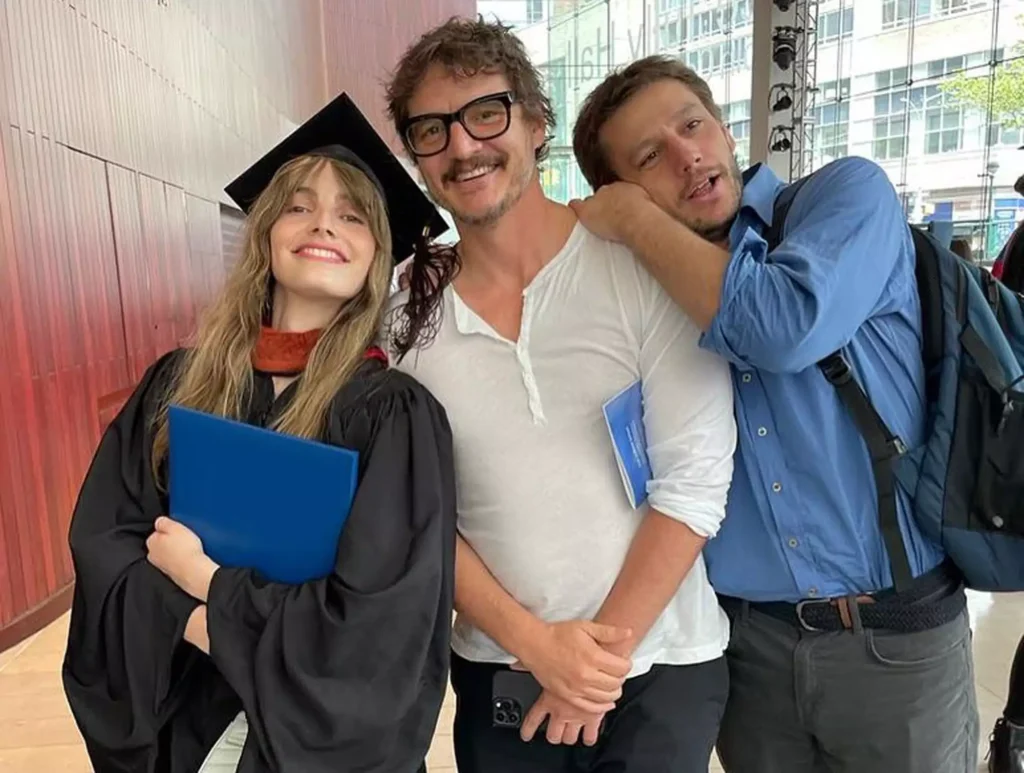
The Balmaceda Pascal story doesn’t start in California. It starts in a country unraveling.
In 1973, General Augusto Pinochet seized power in Chile through a military coup, and the years that followed turned ordinary people into targets. José Balmaceda Riera was a young doctor in his late twenties. His wife Verónica Pascal Ureta was a child psychologist. Neither was a revolutionary by any conventional definition — but they were young, politically aware, and willing to shelter people who were being hunted.
They hid political dissidents in their home. One of those dissidents, under torture, gave up José’s name.
The regime added both parents to its list of enemies of the state. They spent six months hiding inside the Venezuelan embassy in Santiago — a strange purgatory between the country they’d built their lives in and the unknown waiting outside. Eventually they secured political asylum in Denmark, spent time there, and then made their way to the United States, settling first in San Antonio, Texas.
Pedro was nine months old when the family fled. Javiera, the eldest, was three. By the time the family reached San Antonio, they were Chilean exiles with American ZIP codes and everything they owned in luggage.
Nicolás was born in California — sometime around 1987, based on available reporting — after his father had relocated to Orange County to join the University of California Irvine Medical Center. He entered a household shaped entirely by displacement: Chilean food at the dinner table, Spanish spoken between parents, a 34-strong extended family visible only during visits back to Santiago, and an older brother already developing the hyperaware emotional intelligence that would eventually make him one of the most compelling actors of his generation.
Two political refugees had turned their survival into a family. Nicolás grew up inside that inheritance.
The Turning Point: Two Events That Shaped Everything
In 1995, when Nicolás was roughly eight years old, the American chapter of his family’s life collapsed in public.
His father, Dr. José Balmaceda, had become a prominent fertility specialist at UC Irvine, co-directing a clinic called the Center for Reproductive Health alongside two partners. That year, the Orange County Register broke a story that would win a Pulitzer Prize and devastate dozens of families: the clinic’s doctors were accused of harvesting eggs and embryos from fertility patients and implanting them in other women without anyone’s knowledge or consent. Approximately sixty women allegedly had eggs taken without consent, resulting in at least fifteen known births.
José denied the extent of his personal involvement, contending the misappropriation was primarily his partner’s doing. He nonetheless fled to Chile in September 1995 before receiving his indictments, taking Verónica and the two youngest children — including Nicolás — with him. Pedro and Javiera, who had built lives in the United States, stayed behind.
The family was split across an ocean by scandal. Nicolás finished his childhood in Chile.
Then, in 2000, Verónica Pascal Ureta died by suicide. She was forty-six. Pedro, who had spent five years waiting tables and auditioning in New York, had not yet broken through. He changed his professional name from Balmaceda to Pascal as a tribute to his mother — carrying her surname into every role he’d eventually play.
Nicolás was approximately thirteen when he lost her.
These two events — the scandal that sent his family back to Chile, and the loss of a mother he’d grown up watching work with vulnerable children — don’t appear in any clinical research paper. But they form the invisible architecture beneath his career choice. A son of a reproductive endocrinologist and a child psychologist, who watched both professions tested to their limits, chose to spend his life helping children whose brains weren’t working the way they should.
Career Rise: Medicine, Research, and the Invisible Work
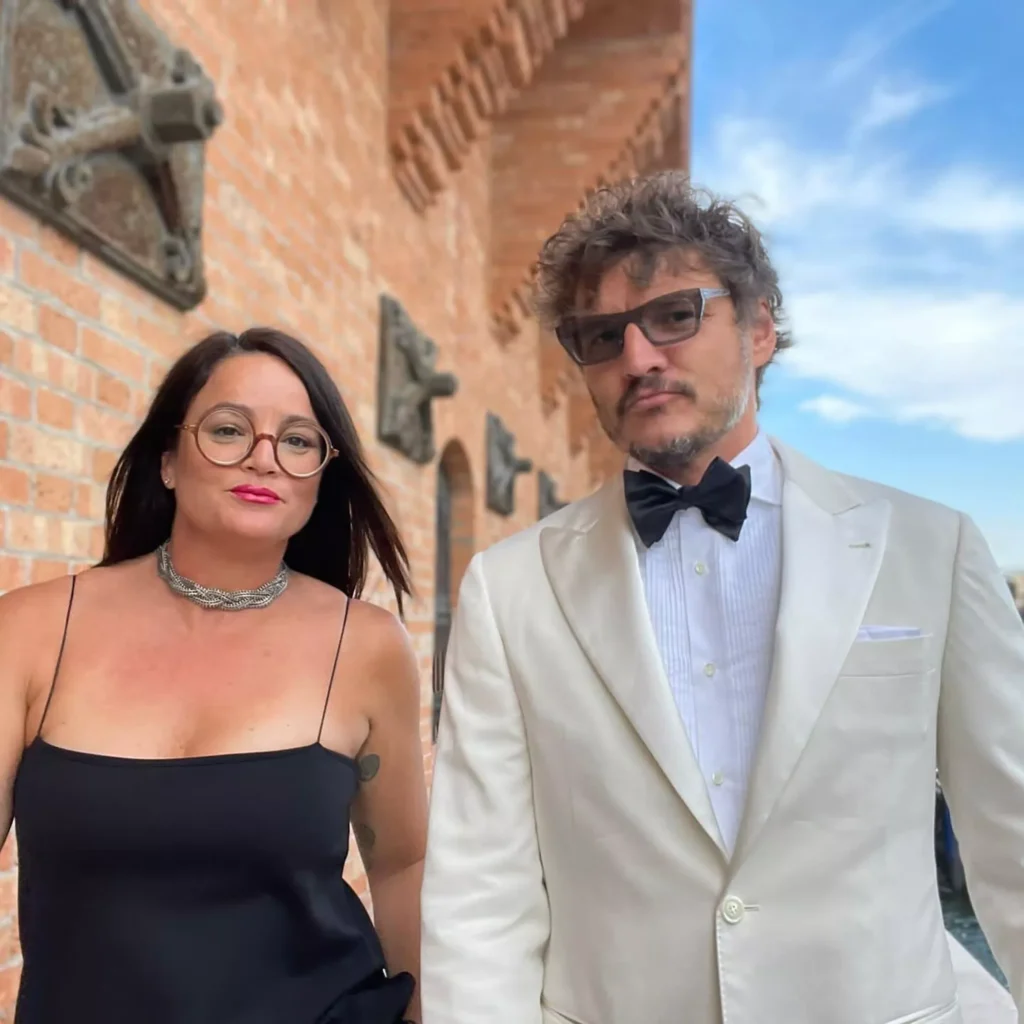
Nicolás enrolled at the University of Chile in 2008, beginning a seven-year medical degree program in one of Latin America’s most rigorous academic institutions. He graduated with his MD in 2015 — the same year Pedro was finishing Narcos for Netflix and starting to become globally famous.
He didn’t celebrate by attending premieres. He went back to school.
Specializing in pediatric neurology meant choosing one of medicine’s most emotionally demanding fields — children with epilepsy, developmental delays, genetic neurological disorders, brain injuries that parents hadn’t yet learned to name. It requires years of additional training after the MD, the patience to explain impossible news to frightened families, and the intellectual stamina to stay current in a field where the science moves fast.
Nicolás pursued research alongside clinical training. He crossed the Atlantic in the other direction from his family’s original exile — not to America as a refugee but as a researcher — and worked at Columbia University in New York City in the Department of Biobehavioral Sciences, where his focus landed on the intersection of biology and behavior. His expertise spans neurobiology, neurophysiology, and behavioral neuroscience.
Back in Chile, he affiliated with Salud a la Calle — a community health organization made up of doctors and medical students who provide care and health awareness to underserved populations. The name translates roughly as “Health on the Street.” It’s not a hospital. It’s not a research lab. It’s the kind of work you do because you believe medicine should reach the people who can’t reach medicine.
He also collected technical certifications along the way — mathematics through Coursera, Python and Django through Udemy — suggesting someone interested in how computational tools might eventually serve clinical or research goals. For a field increasingly reliant on brain imaging data and neurological pattern analysis, that’s not an idle hobby.
Family Life: The Bond That Holds
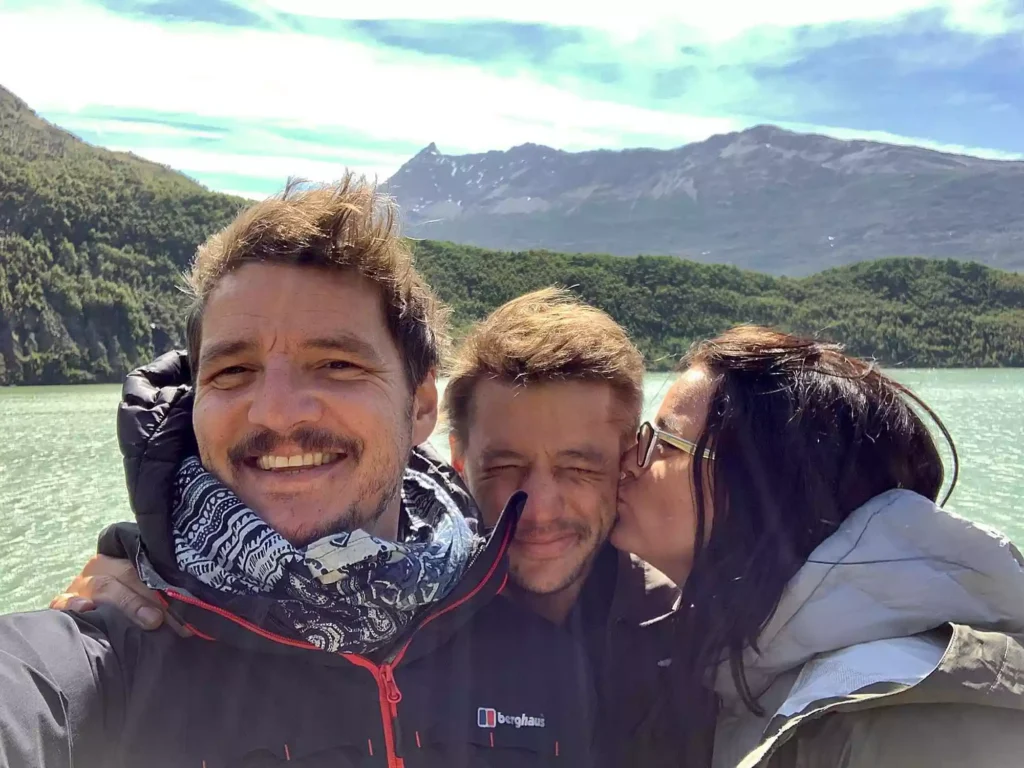
The Balmaceda Pascal siblings didn’t grow up in the same house for most of their lives. Pedro and Javiera were raised in the United States. Nicolás and Lux returned to Chile with their parents in 1995. That geography should have created distance. Instead, what all four describe is a closeness forged out of exactly that distance — the family that FaceTimes rather than drops by, that shows up at each other’s career milestones, that speaks its love loudly when it gets the chance.
Pedro called Nicolás “Dr. Guapo” — Doctor Handsome — in a 2021 Instagram post. That’s a nickname, but it’s also shorthand for something real: the younger sibling who went further into the weeds of human suffering than the rest of the family, and came out with a medical degree and his dignity intact.
Lux Pascal, who came out as transgender in 2021, has spoken publicly about the role her brothers played in her transition. Pedro was on FaceTime when she officially told him — and he simply asked her how she felt. Nicolás, who lives a private life, has been consistently described as equally supportive, part of a sibling unit that Pedro once summed up by saying they all “call each other.”
Javiera, the eldest, runs Amazon Studios’ Latin American originals division and produced Argentina, 1985, which earned an Academy Award nomination for Best International Feature Film in 2023. Pedro attended the Oscars that year to support her. Nicolás’s version of showing up tends to be quieter — at family events, at the Triple Frontier premiere in March 2019, at the edges of his famous brother’s public life.
He isn’t married, as far as publicly available information confirms. No partner or children have been documented. He keeps that part of his life genuinely private — his Instagram is locked, his Facebook activity minimal.
Controversies: The Shadow of His Father’s Scandal
Any honest account of Nicolás Balmaceda Pascal has to look directly at the scandal that reshaped his family when he was a child.
The UC Irvine fertility clinic case is one of American medicine’s most disturbing documented ethics violations. Around sixty women had eggs or embryos taken without their knowledge or consent during procedures at the Center for Reproductive Health in the early 1990s. At least fifteen children were born from those transfers — children whose genetic mothers never knew they existed.
José Balmaceda maintained that the primary responsibility lay with his partner, Dr. Ricardo Asch. He fled to Chile in 1995 before being formally charged, was indicted in absentia on twenty counts of mail fraud for insurance billing, and spent years in Chile continuing to practice medicine — eventually becoming director of the Latin American Assisted Reproduction Network and, with notable irony, standardizing patient consent forms across fertility clinics in Chile, Peru, and Bolivia.
Nicolás bears none of the legal or professional accountability for this. He was a child. He didn’t choose his father’s profession or his father’s decisions.
But he grew up in the aftermath. He returned to Chile because of it. He built a career in medicine — in a specialty focused on the most vulnerable patients imaginable, children — in the shadow of a father whose medical ethics became a matter of public record and federal indictment.
Whether his choice of medicine reflects a desire to reclaim something about what the profession should mean, or simply reflects the intellectual environment of a household with two medical parents, can’t be known from the outside. What’s documented is that he chose medicine anyway.
In 2022, José Balmaceda signed a plea agreement and returned to the United States. The resolution came roughly twenty-seven years after the scandal broke. Nicolás was by then a practicing pediatric neurologist in his mid-thirties.
Where He Is Now

As of 2025–2026, Nicolás Balmaceda Pascal is a pediatric neurologist working in Chile, affiliated with Hospital Santiago Oriente Dr. Luis Tisné Brousse, according to multiple sourced accounts, and continuing work with Salud a la Calle. He lives between Chile and New York, reportedly visiting his father and homeland regularly.
His Instagram remains private. His public footprint is minimal by design. He showed up at Pedro’s side for the Triple Frontier premiere in 2019 and has appeared in occasional family photos — always slightly outside the frame, never angled toward the camera in the way someone who wants to be noticed positions themselves.
Pedro, in every public mention of his brother, leads with the same two facts: Nicolás is brilliant, and Nicolás does not want to be known for being brilliant. Those two facts together tell you more about someone’s character than most published profiles manage.
Conclusion
In a family where legacy tends to be measured in screen credits and cultural impact, Nicolás Balmaceda Pascal measures his in something harder to quantify.
Pediatric neurologists work with children who have epilepsy that won’t stop, with developmental delays that families are only beginning to understand, with genetic conditions that carry no cure and only management. The legacy of that work doesn’t appear in award season coverage or streaming charts. It lives in the outcomes of the children seen, in the families guided through diagnosis, in the research that slowly moves the field one published paper at a time.
His family’s lineage carries one of Chile’s most politically charged surnames — related to the Allende family, descended from the aristocratic Balmaceda line, carrying the history of people who bet their safety on political principles and lost. Nicolás carries that name quietly into children’s hospitals and community clinics.
Pedro Pascal became famous partly for playing characters who adopt children, protect children, sacrifice for children who are not their own. The brother who chose pediatric neurology as a career didn’t need a script to make that same decision.
The Balmaceda Pascal siblings are, collectively, one of the more remarkable family stories in contemporary public life — not because of any single individual, but because four people who began as political refugees, navigated tragedy, crossed continents, and built lives in different languages all turned out, each in their own way, to be doing something that matters.
Nicolás just happens to be doing his in a white coat, far from any camera, exactly the way he’d want it.
You may also like Bella Thornton
FAQ: What People Actually Search About Nicolás Balmaceda Pascal
1. Who is Nicolás Balmaceda Pascal?
He’s a Chilean-American pediatric neurologist and medical researcher, and the younger brother of actor Pedro Pascal. He earned his MD from the University of Chile (2008–2015) and conducted research at Columbia University’s Department of Biobehavioral Sciences. He works in community health through the organization Salud a la Calle.
2. How is Nicolás related to Pedro Pascal?
He’s Pedro’s younger brother. They share both parents — José Balmaceda Riera (a fertility doctor) and Verónica Pascal Ureta (a child psychologist). Pedro also has an older sister, Javiera, and a younger sister, Lux Pascal.
3. When was Nicolás Balmaceda Pascal born?
Most sources report his birth year as approximately 1987 with an April 10 birthday, placing him roughly twelve years younger than Pedro (born 1975) and five years older than Lux (born 1992). This has not been confirmed by a primary document. He was born in California, after his family emigrated from Chile.
4. What does Nicolás Balmaceda Pascal do for a living?
He’s a doctor specializing in pediatric neurology — the diagnosis and treatment of neurological conditions in children, including epilepsy, developmental delays, and genetic neurological disorders. He has also done research in neurobiology and behavioral neuroscience, including a research position at Columbia University.
5. Did Pedro Pascal say anything public about his brother?
Yes. In April 2019, Pedro posted a birthday tribute on Instagram introducing Nicolás and writing that he “hates attention and loves doing good.” He referred to him as “younger, smarter, and more handsome.” In a 2021 Instagram post, Pedro also called him “Dr. Guapo” (Doctor Handsome). These are among the only primary-sourced public comments about Nicolás.
6. Why did Nicolás Balmaceda Pascal grow up in Chile?
In 1995, his father José Balmaceda was implicated in the UC Irvine fertility clinic scandal and fled to Chile before being formally charged. He took his wife and their two youngest children — Nicolás and Lux — with him. Pedro and Javiera, who were older and had established lives in the US, stayed behind.
7. What is the UC Irvine fertility scandal?
Doctors at the Center for Reproductive Health, including José Balmaceda, were accused of harvesting eggs and embryos from fertility patients and transferring them to other women without consent. Approximately sixty women were affected and at least fifteen children were born from the unauthorized transfers. The Orange County Register’s coverage won a Pulitzer Prize. José fled to Chile in 1995 and was indicted in absentia. He signed a plea agreement and returned to the US in 2022.
8. Is Nicolás Balmaceda Pascal married?
No confirmed information about a partner or children is publicly available. He keeps his personal life private.
9. Does Nicolás Balmaceda Pascal have social media? His Instagram account is @bubilibubilibu, which has approximately 5,500 followers and is set to private. His Facebook is @nicolasbp87. He does not maintain a public professional profile in the entertainment sphere.
10. What is Salud a la Calle? It’s a Chilean community health organization made up of doctors and medical students who work to create health awareness and provide care in underserved communities. Nicolás has been affiliated with it as a practicing physician.
11. What is Nicolás’s connection to the Allende family?
Through his mother Verónica Pascal Ureta, Nicolás is related to Chilean political history — his family is connected to the Allende and Balmaceda political dynasties. Pedro Pascal is the great-nephew of Laura Allende, a politician and sister of Salvador Allende, who served as President of Chile before the 1973 coup. Nicolás carries the same lineage.
12. What did Pedro mean by “Dr. Guapo”?
In a 2021 Instagram selfie with Javiera and Nicolás, Pedro captioned his brother with “Dr. Guapo” — Spanish for “Doctor Handsome.” It’s a playful nickname that has stuck in fan coverage of the family.
13. What was Nicolás’s mother like?
Verónica Pascal Ureta was a child psychologist who, alongside her husband, was listed as an enemy of the Pinochet regime for sheltering political dissidents. She died by suicide in 2000 at the age of 46. Pedro changed his professional name to Pascal as a tribute to her. Nicolás was approximately thirteen when she died.
14. How is Nicolás different from his siblings professionally?
Pedro is one of Hollywood’s most prominent actors. Javiera runs Amazon Studios’ Latin American originals division and produced an Oscar-nominated film. Lux is an actress and transgender activist. Nicolás is the only one of the four who chose a completely non-entertainment path — medicine rather than film, television, or performance.
15. Where does Nicolás Balmaceda Pascal live now?
He splits time between Chile and New York, according to reporting from aubtu.biz and other sources. His clinical work in Chile is associated with Hospital Santiago Oriente Dr. Luis Tisné Brousse, per multiple secondary reports. He reportedly visits his family in Chile regularly.