Charlene Fleming: The Woman Behind the Fighter — The Real Story
Before Amy Adams ever stepped onto a film set in Lowell, Massachusetts, the real Charlene Fleming was living a life that Hollywood would later compress into two hours and make look easy. It wasn’t. She turned down the boxer. More than once. She sat through a first date that went badly enough that most women wouldn’t have granted a second. And when she finally committed to a man whose family despised her, whose career put him in hospital-level danger on a regular basis, and whose world was nothing like the quiet athletic life she’d carved out for herself — she didn’t waver.
That’s not a movie character. That’s a woman who decided, deliberately, where she stood. And she stood there.
Quick Bio
| Detail | Info |
|---|---|
| Full Name | Charlene Fleming Ward |
| Born | 1976, Lowell, Massachusetts, USA |
| Nationality | American |
| Ethnicity | Caucasian |
| Education | University of Rhode Island (track-and-field scholarship, graduated c. 1999) |
| Athletic Background | High jumper, 5’9″, multiple accolades |
| Occupation | Former bartender; later personal trainer/fitness coach (per some sources) |
| Spouse | Micky Ward (m. 2005) |
| Children | Kasie Ward (stepdaughter, from Micky’s prior relationship) |
| Portrayed By | Amy Adams in The Fighter (2010) |
| Current Residence | Lowell, Massachusetts |
| Social Media | Not active on any platform |
Where She Came From
Lowell, Massachusetts, is the kind of city that produces people who don’t give up easily. It’s a working-class town with mill-town roots, Irish immigrant history, and a culture where loyalty and toughness aren’t values so much as given conditions. Charlene Fleming grew up inside that world, born in 1976 into a family whose details she has kept almost entirely private across her entire public life.
What she did leave behind was a record on the track. Charlene earned a scholarship to the University of Rhode Island through her abilities as a high jumper — a discipline that rewards exactly the combination of precision, power, and nerve that would later define her in an entirely different arena. At 5’9″, she competed at the collegiate level and accumulated enough accolades that when Micky Ward later wrote about her in his 2010 memoir, Irish Thunder: The Hard Life and Times of Micky Ward, he noted she had more medals than he did.
That’s worth sitting with. A world-title contending boxer wrote, on paper, that his wife outearned him in hardware. She graduated from URI around 1999 and came home to Lowell. Her exact field of study has never been disclosed. She took a job tending bar at Captain John’s — a local spot well-known to the Ward family — while she figured out what came next.
What came next walked through the door one evening and didn’t know how to stop coming back.
The Turning Point
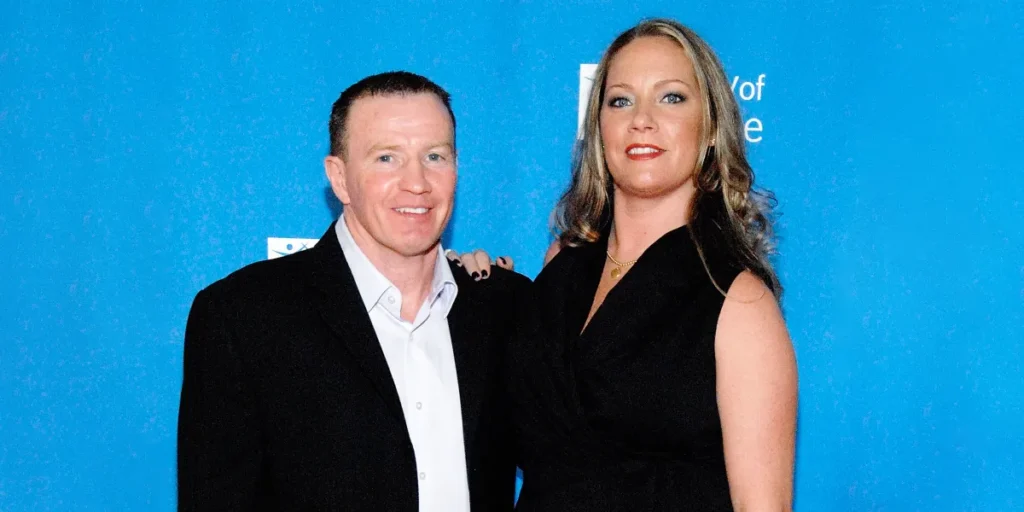
Micky Ward didn’t exactly arrive smoothly. He knew Charlene’s brother first, which gave him an introduction, but whatever charm he eventually deployed in the boxing ring did not immediately translate to a barstool at Captain John’s. He was, by his own admission in his memoir, shy to the point of paralysis around her. He’d nurse a single soda for hours while she worked the bar, watching her move through the room — outspoken, funny, completely in her element — and could barely string a sentence together in her direction.
His father started dropping hints, bragging to Charlene about his son during visits to the bar before Micky could manage it himself. Charlene, for her part, wasn’t particularly impressed. She’d noticed him. She just hadn’t decided what to do with that yet.
He eventually found the nerve to ask her out. She eventually said yes. Then he took her somewhere she didn’t want to be, in company she didn’t want to keep, and she left. Most people would have read that clearly. Micky Ward read it as information he could work with. He showed back up, made the case, and she agreed to a second chance.
She didn’t know yet that she was agreeing to much more than a second date.
Career and Athletic Life
Charlene’s own athletic history tends to get swallowed whole by her husband’s story, which is exactly what she seems to prefer. But the facts are the facts. She was a scholarship-level collegiate high jumper. She earned those medals Ward mentioned in print. She competed at the University of Rhode Island, a Division I program in the Atlantic 10 Conference, which is not a place that hands out track scholarships as favors.
After leaving URI, she worked as a bartender and, according to some sources, later transitioned into fitness and personal training. The specifics of her professional life before and after her marriage are largely undocumented, which is consistent with her general approach to privacy. She doesn’t discuss her career in interviews. She doesn’t have social media. She hasn’t written a memoir.
What’s known is that after Micky’s retirement in 2003 and their marriage in 2005, the couple invested in businesses together. They purchased a tanning salon and a training center in Lowell. Micky also became co-owner of a boxing gym, which he later runs with his nephew Sean, and an outdoor hockey rink. Charlene has supported these ventures without seeking a public profile connected to any of them.
She showed up for the work. She just didn’t show up for the cameras.
Personal Life
What Micky Ward had before Charlene was a boxing career built partly on suffering — a man whose family managed him into bad fights, whose brother’s crack addiction took up more oxygen than his training did, and who was considered a “stepping stone” boxer for a significant part of his professional life. A stepping stone is what managers call a fighter they want other fighters to beat. It means everyone around you has decided you’re there to be used.
Charlene didn’t accept that categorization. That’s the central fact of their relationship. She told him what she saw, and what she saw wasn’t a stepping stone. His family hated her for it. His mother, Alice, and his seven sisters were collectively hostile to Charlene’s influence over Micky, viewing her as an outsider who was dismantling the family’s control over his career. Micky confirmed in interviews after the film released that some of that hostility hadn’t fully disappeared even years later.
She wasn’t fighting for control. She was fighting for him to see himself clearly. There’s a difference, and it took a while for everyone in the Ward orbit to recognize it.
Their relationship was tested before the marriage. Charlene’s discomfort with the violence of professional boxing was real and documented — she found watching him fight genuinely distressing, not thrilling. And she cared nothing for the money his fights generated. That’s not a small thing to let go of when the income could be substantial. It says something about what she actually valued.
When Micky retired in 2003, Charlene married him two years later. They adopted four dogs. They built a life in Lowell, close to everything Micky had ever known. Her relationship with Kasie Ward, Micky’s daughter from a prior relationship, started uneasily but eventually grew into something solid. Time and consistency did the work that first impressions couldn’t.
The Film and the Woman It Portrayed
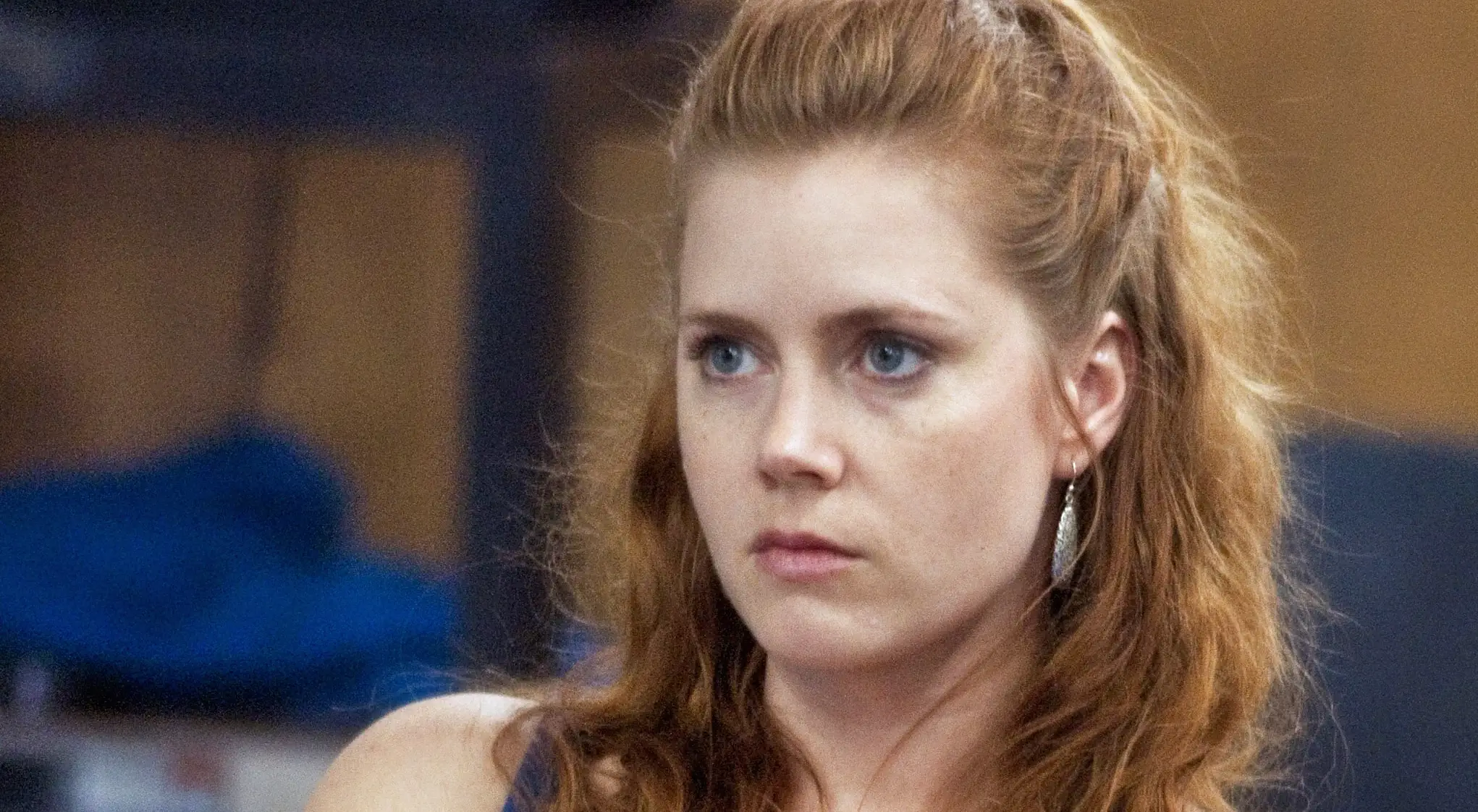
On December 17, 2010, The Fighter opened in American cinemas and immediately complicated any hope Charlene had of remaining entirely out of the public eye. Director David O. Russell cast Amy Adams in the role, and Adams took it seriously enough to actually meet Charlene before filming began.
In an interview, Adams described how spending time with the real Charlene helped her avoid turning the character into a caricature — it kept her “honest,” she said, about the time, the place, and the people. Russell’s own description of the character was far more blunt. He told press that Amy Adams was playing “a sexy bitch,” and that Charlene as a figure was defined by her willingness to stand her ground against a domineering family structure. That’s a reductive way to describe what Charlene actually did, but it wasn’t entirely wrong in terms of dramatic function.
Adams received an Academy Award nomination for Best Supporting Actress for her portrayal. She didn’t win — that award went to co-star Melissa Leo, who played Alice Ward. But the nomination was genuine recognition of how layered the role was, and how much of the real woman she had captured.
Charlene herself, in remarks reported by those who met her on set, was quietly supportive of the film being made without being eager for personal attention. She was happy for Micky’s story to be told. She wasn’t looking to be famous for being in it.
The Controversies
The most significant public friction in Charlene’s life wasn’t legal or criminal — it was domestic and family-based, and it played out through years of tension between her and Micky’s mother and sisters. That conflict is well-documented: Micky himself confirmed it in interviews, Ward family members have discussed it publicly, and the film portrayed the hostility with enough accuracy that the real people involved recognized themselves.
There’s an honest point to be made here. The Ward sisters weren’t villains for not wanting an outsider reshaping their family dynamic. And Charlene wasn’t a hero for being right about Micky’s management. What actually happened was that a family with a deeply enmeshed structure came into contact with a woman who loved Micky independently of what he could do for the family — and both sides experienced that collision hard.
It’s also worth noting what Charlene didn’t do. She didn’t seek press coverage to argue her side. She didn’t pursue the public narrative after the film made it available. She didn’t monetize the conflict. Whatever she felt during those years, she kept almost entirely to herself.
There are no criminal records, no public controversies in the legal sense, and no documented behavior that raises ethical questions. Her private life has stayed private, which is itself a kind of dignity when the world is actively trying to look in.
Current Life
As of the most recent available information, Charlene and Micky Ward continue to live in Lowell, Massachusetts. Micky has remained active in the boxing community — he still manages and helps train fighters at his gym, expanded in late 2024 to include a sauna and cold plunge facilities. He runs Team Micky Ward Charities, an organization he founded in 2005 to support children in need, including an annual golf tournament, a motorcycle rally, and a 5K run.
Whether Charlene participates actively in the charity work or remains behind the scenes isn’t publicly documented. Given her consistent preference for privacy over the past 25-plus years, the latter seems more likely.
She’s not on Instagram. She’s not on Facebook or X. She hasn’t appeared on podcasts or given print interviews. Micky has an active Instagram presence with tens of thousands of followers, but Charlene’s name appears there only in photos and mentions by others.
The couple recently celebrated over two decades of marriage. That’s a fact that speaks quietly but speaks clearly.
Conclusion
Charlene Fleming’s legacy isn’t the kind that gets carved into a wall somewhere. It’s the kind that changed one person’s direction at the exact moment that direction needed changing.
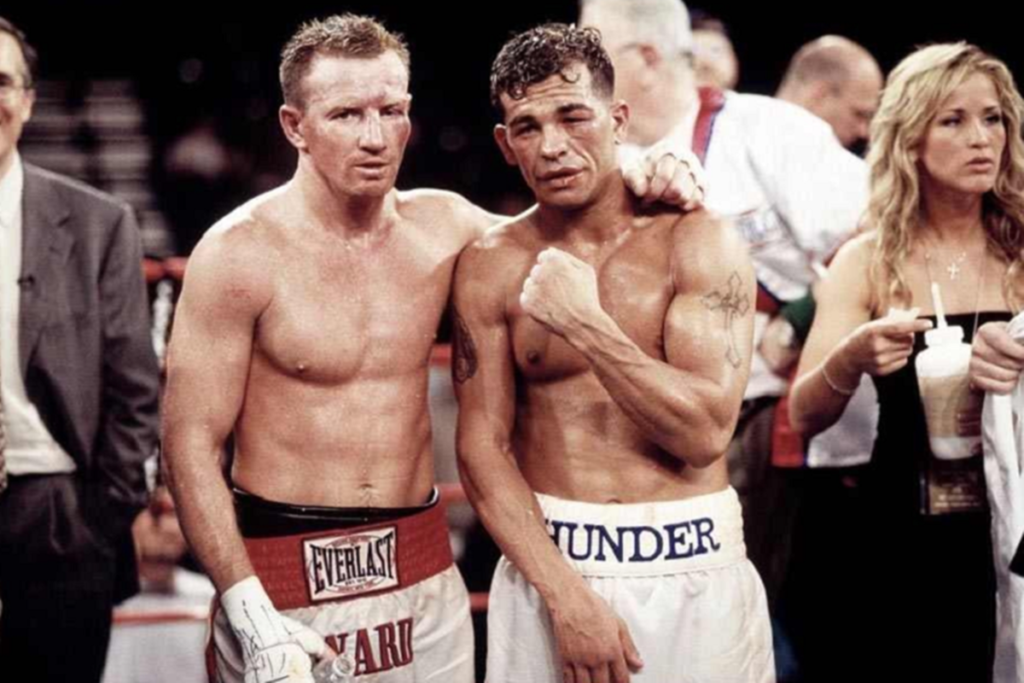
Micky Ward’s career resurgence — the WBU Light Welterweight title win over Shea Neary in 2000, the legendary trilogy of fights against Arturo Gatti between 2002 and 2003, the Hall of Fame induction in 2015 — happened because a man who had been underestimated and mismanaged finally had someone in his corner who only wanted him to win. Not for the family purse. Not for control. Just for him.
She also established, by example, what it looks like to step into a very noisy public story and refuse to turn it into more noise. Millions of people watched Amy Adams play a version of her. Articles have been written about her in multiple languages. Her name is now permanently attached to one of the best sports films of the 21st century. And she’s never once used any of that to build a personal brand.
You may also like Jason Hawk
FAQ
1. Who is Charlene Fleming?
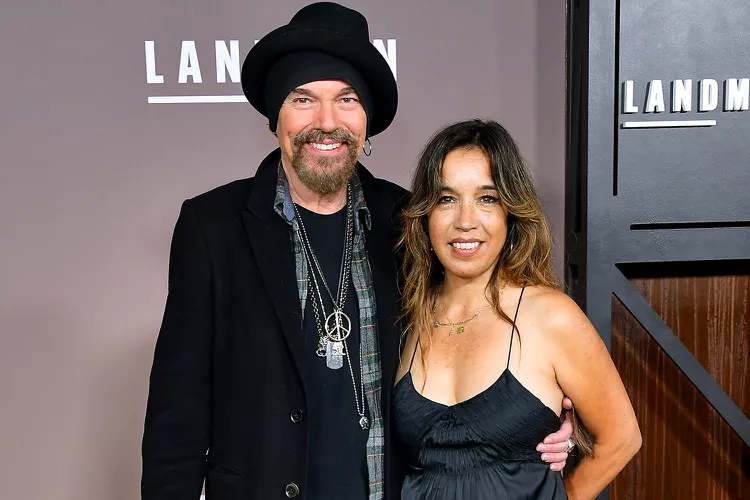
Charlene Fleming, also known as Charlene Ward or Charlene Fleming Ward, is the wife of retired professional boxer Micky Ward. She is also a former collegiate athlete who competed as a high jumper at the University of Rhode Island on a track-and-field scholarship.
2. Who played Charlene Fleming in The Fighter?
Amy Adams portrayed Charlene in David O. Russell’s 2010 biographical film The Fighter. Adams received an Academy Award nomination for Best Supporting Actress for the role. She met the real Charlene before filming to better understand the person she was portraying.
3. How did Charlene Fleming meet Micky Ward?
Charlene was working as a bartender at Captain John’s in Lowell, Massachusetts, when Micky first encountered her. He already knew her brother. He spent several evenings barely speaking while she worked, nursing a soda for hours, before building up the confidence to ask her out. She initially rejected him, he persisted, and the first date went badly enough that he had to work for a second one.
4. When did Charlene Fleming and Micky Ward get married?
They married in 2005, two years after Micky’s retirement from boxing in 2003. They had been in a relationship for a number of years before marrying. The exact wedding date has not been publicly disclosed.
5. Does Charlene Fleming have children?
Charlene does not have biological children of public record. Kasie Ward is Micky’s daughter from a prior relationship. Charlene and Kasie’s relationship started with some friction but eventually became warm, according to multiple accounts of the family.
6. What was Charlene Fleming’s athletic career?
She was a collegiate high jumper at the University of Rhode Island, where she attended on a track-and-field scholarship. She stood 5’9″ and accumulated multiple athletic accolades — enough that Micky noted in his memoir that she had more medals than he did.
7. Did Charlene Fleming and the Ward family get along?
Not initially. Micky’s mother Alice and his seven sisters were openly hostile to Charlene, viewing her influence over Micky as a threat to the family’s control over his career. Micky confirmed this tension in interviews after the film’s release, noting it hadn’t entirely disappeared. In time, the relationships became more civil.
8. Does Charlene Fleming have social media?
No. She has no known accounts on Instagram, Facebook, X, or any other platform. Micky Ward maintains an active public Instagram account, but Charlene does not appear to have her own.
9. What does Charlene Fleming do now?
As of the most recent available information, she lives in Lowell, Massachusetts with Micky. Some sources indicate she has worked as a personal trainer and fitness coach following her athletic background. The specifics of her current occupation are not publicly documented.
10. What is Charlene Fleming’s net worth?
This is genuinely unclear. Various sources estimate her personal net worth at around $500,000, while others suggest the couple’s shared assets may approach $1 million, largely built through Micky’s boxing career, apparel company, gym co-ownership, and other business ventures. These are unverified third-party estimates.
11. Why did Amy Adams’s portrayal of Charlene get an Oscar nomination?
Critics praised Adams for bringing emotional depth and credibility to a character who could have been written as a simple foil to the Ward family. The Hollywood Reporter described her performance as “the most luminous personality in the film.” Adams won multiple other awards for the role that year, including Screen Actors Guild and Golden Globe nominations, though she did not win the Oscar.
12. What is The Fighter 2 and would Charlene appear?
The Fighter 2 is a long-discussed but still unconfirmed sequel, which would cover Micky Ward’s trilogy of fights against Arturo Gatti. Mark Wahlberg has spoken about wanting to make it but acknowledged he may have aged out of the role. Amy Adams has been mentioned as potentially reprising the role of Charlene. As of 2025, no release date or confirmed production start has been announced.
13. What happened to Charlene Fleming after the film came out?
She stayed exactly where she was. No press tour, no memoir, no social media launch. She supported the film publicly, appeared at some events with Micky, and returned to private life in Lowell. The film made her famous in the way that being portrayed by Amy Adams tends to do. She declined to do anything in particular with that fame.