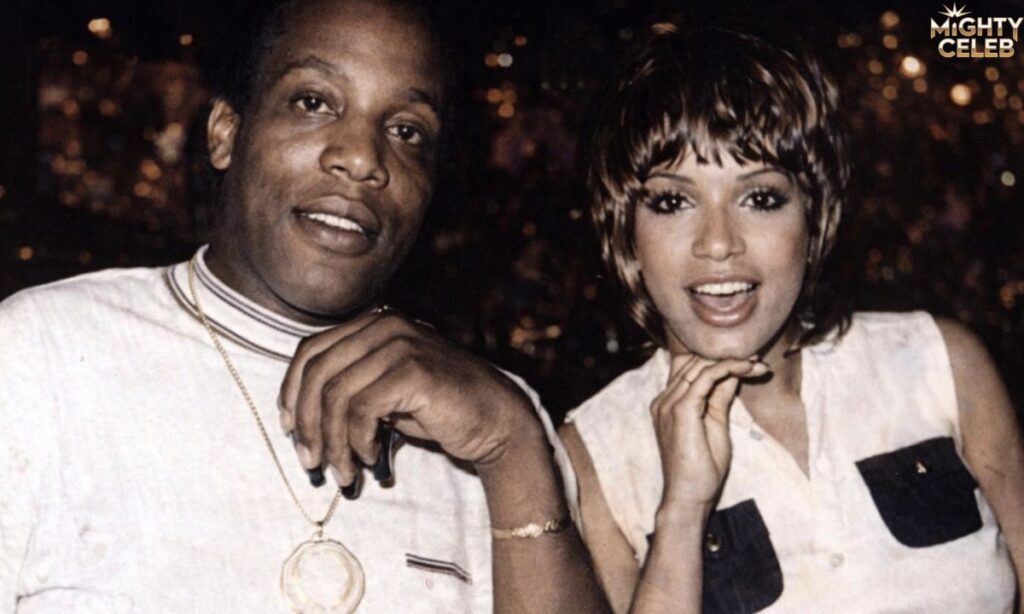
Julianna Farrait: The Woman in the Chinchilla’s Shadow — The True Story
Julianna Farrait. She once told a reporter, without a trace of apology, that people who claim money doesn’t matter are simply lying. That line — blunt, unembarrassed, almost refreshing in its honesty — tells you more about Julianna Farrait than any court document ever could. She didn’t fall into a life of crime because she was desperate. She walked in with her eyes open, drawn by danger and dazzled by diamonds, and she kept walking back in long after the lessons had been paid for in prison time.
Hers isn’t a story of a woman swept along by a powerful man. That’s the Hollywood version. The real Julianna Farrait chose this life — twice — and the truth of her is far more complicated, and far more interesting, than the character who smiles warmly at Denzel Washington on a movie screen.
Quick Bio
| Detail | Info |
|---|---|
| Full Name | Julianna Farrait Rodriguez |
| Also Known As | Julie Farrait, Julie Lucas |
| Born | c. 1941, San Juan, Puerto Rico |
| Nationality | Puerto Rican-American |
| Spouse | Frank Lucas (m. 1967; his death 2019) |
| Children | Francine Lucas-Sinclair, Ray Lucas, Frank Lucas Jr. (biological); four stepchildren |
| Known For | Wife of Harlem drug kingpin Frank Lucas; multiple drug convictions |
| First Arrest | January 28, 1975 — Teaneck, New Jersey |
| Second Arrest | Las Vegas (exact year varies by source; estimated late 1970s–early 1980s) |
| Third Arrest | May 20, 2010 — Isla Verde, Puerto Rico |
| Final Sentence | 5 years (February 2012, Manhattan federal court) |
| Last Public Appearance | Frank Lucas’s funeral, June 11, 2019, Newark, New Jersey |
Where She Came From
San Juan in the 1940s was a city caught between two worlds — Caribbean warmth and the slow creep of American influence, poverty sitting quietly alongside ambition. Julianna grew up in a modest, close-knit family that valued hard work, faith, and community. The public record of her early years is thin. What’s known is that she was popular, charming, and beautiful enough to be named her school’s homecoming queen.
That title matters — not for vanity’s sake, but because Hollywood later inflated it into something it wasn’t. The 2007 film American Gangster portrays her character, renamed “Eva,” as a former Miss Puerto Rico. Research confirmed she never appeared on any Miss Puerto Rico winners list. The real title was smaller, more local, more human. She was a homecoming queen from San Juan — not a televised beauty pageant winner. The movie needed a grander backstory. The truth was already grander than anything they needed to invent.
She spoke little English at the time. She had no particular documented career before the mid-1960s. She was, by all accounts, a young woman from a respectable family living a quiet life on the island — until a flight to New York changed everything.
The Turning Point
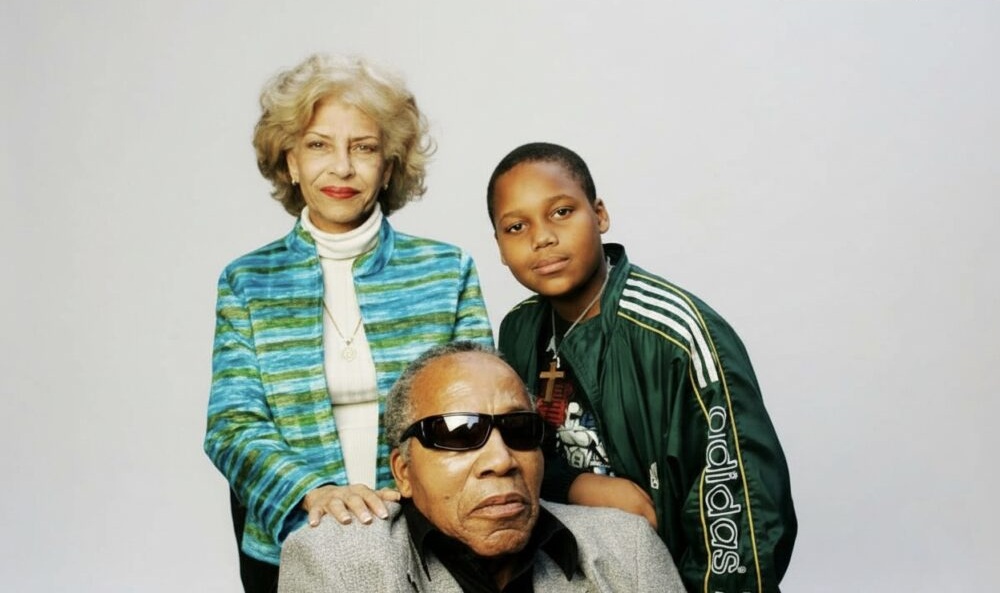
Frank Lucas noticed her on a flight from Puerto Rico to New York. Every time he turned around, she was smiling at him. He didn’t need more of a hint than that. He was persistent enough to get her New York address before the plane landed, despite the language barrier between them.
They didn’t speak again for months. They ran into each other at a bar sometime later, talked more, and the connection accelerated fast. Julianna later said the first thing she noticed about Frank was his confidence and coolness — a self-assured man who seemed completely at ease in any room. She found that deeply attractive. She still did, decades later, when she said it out loud in an interview.
They married in 1967 at a justice of the peace in San Juan, surrounded by her family and friends. She was excited about finding an apartment for them to rent. She didn’t yet know he could buy the building outright.
The marriage wasn’t just a romantic union. It was an entry into one of the most audacious criminal enterprises in American history.
The Rise
By the time Julianna married Frank, he was already building what would become a staggering operation. His innovation — and it was genuinely innovative, in the way that only criminal minds occasionally are — was to cut out the Italian mafia middlemen entirely and source heroin directly from Southeast Asia’s Golden Triangle during the Vietnam War, allegedly using military connections to move product inside coffins of American soldiers returning from the front.
The scale of it was almost surreal. Frank claimed he made $1 million daily at his peak, held over $50 million in offshore accounts, and had hundreds of millions in stockpiled drugs. He owned office buildings, a cattle ranch, and apartment complexes across the United States and Puerto Rico.
Julianna entered that world and didn’t flinch. She wore it well. Literally. The couple’s life was a walking display of what drug money looked like when it had nowhere left to hide — custom Mercedes, designer furs, diamonds so large they defied subtlety.
The most famous symbol of that excess came from a boxing match. In 1970, Frank attended a Muhammad Ali fight in Atlanta wearing a suit and was irritated to find that smaller-time dealers around him were dressed in expensive furs. He wanted to outspend every one of them. What followed became the most notorious piece of outerwear in the history of organized crime — a floor-length chinchilla coat with a matching hat, reportedly worth somewhere between $100,000 and $125,000 combined. Some sources say Julianna purchased it as a gift for Frank; others say he ordered it himself. Either way, she wore that life as naturally as he wore the coat.
What the chinchilla did was what excess always does. It caught the wrong set of eyes.
Personal Life
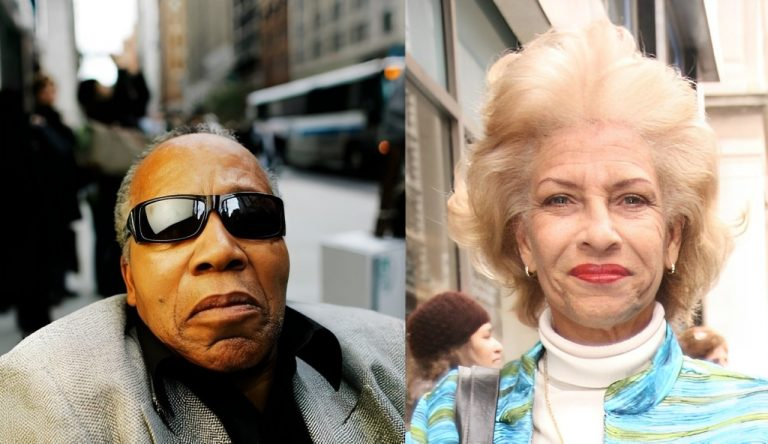
Julianna wasn’t a passive bystander, but she also wasn’t a shadowy crime boss. She occupied the complicated middle ground that most criminal spouses inhabit — deeply embedded in a world she understood and benefited from, while maintaining some distance from its daily mechanics.
When Frank first brought his son Yogi home after the wedding, Julianna bonded with the boy almost immediately, patiently teaching him enough Spanish to communicate with her family during a trip to Puerto Rico. That detail — warm, maternal, ordinary — sits uneasily next to the mug shots. But both versions of her are real.
Frank and Julianna had three biological children together: Francine Lucas-Sinclair, Ray Lucas, and Frank Lucas Jr. She also helped raise four stepchildren from Frank’s earlier relationships, making their household a family of nine. Their daughter Francine was born in 1985, years after Frank’s first arrest, which means Julianna chose to continue building a family with him even through the legal wreckage of the 1970s. That says something about the nature of their bond.
Francine would later describe growing up with a Fendi fur coat, a $10,000 FAO Schwarz train set, and more toys than she could count — and also with federal agents bursting through the front door on an ordinary morning while her father stood at the stove frying eggs. The luxury and the terror arrived together in this family. They always did.
The Controversies
On January 28, 1975, a joint NYPD-DEA strike force arrived unannounced at the Lucas family home in Teaneck, New Jersey. In the chaos of the raid, Julianna reportedly screamed “Take it all!” and threw several suitcases containing over half a million dollars in cash out of a bathroom window. She was trying to destroy the evidence. It didn’t work. Police treated her actions as obstruction, and she received a six-month prison sentence.
Frank’s original sentence was 40 years. He eventually cooperated with authorities, providing testimony that led to over 100 additional drug prosecutions — and his sentence was reduced significantly. Julianna served six months and was released.
Federal authorities then placed Julianna, Francine, and one of Frank’s other children into the federal witness protection program, relocating them to Albuquerque, New Mexico for a year. The woman who had been wearing chinchilla in Harlem was now living in near-anonymity in New Mexico, some days with little more than crackers in the house. Francine was given a new last name. The family existed in the shadows of American anonymity.
After leaving witness protection, Julianna took Francine to Puerto Rico to live with her parents. Frank was eventually released, and the family returned to New Jersey.
Francine once traveled to Las Vegas with her mother, completely unaware that Julianna was there to assist Frank in a drug operation. The FBI arrested Julianna in the process. She served approximately four and a half years for that conviction. The incident devastated Francine, who was old enough by then to understand what had happened — and to feel the weight of it for years afterward.
The third arrest is the one that shocks most people, not because of its criminality, but because of its timing. Julianna was approximately 69 years old. Frank was in his late 70s, ailing, and largely out of the drug business. There was no empire left to protect or profit from.
Federal agents had been tracking Julianna since at least February 2009. On May 11, 2010, she was recorded in a conversation with a government informant, allegedly confirming she had two kilograms of cocaine available and that a separate contact held an additional eight kilograms for prospective buyers. Eight days later, on May 19, she met an undercover informant in a hotel room in the Isla Verde area of Puerto Rico and produced the drugs. DEA agents arrested her the following morning.
In court, she said nothing at all. Except to ask the judge to address her in Spanish.
In February 2012, Manhattan federal court Judge Laura Taylor sentenced her to five years in prison. Before sentencing, Julianna stood and addressed the court: “I am ashamed that at my age I am standing in front of you.” She asked for leniency to care for her elderly husband. The judge denied the request.
That single sentence — spoken quietly in a federal courtroom at nearly 70 years old — is the most human thing Julianna Farrait ever said publicly. The shame came decades late. But it came.
The Hollywood Version vs. The Truth
The character of “Eva” in American Gangster is based on Julianna but is not Julianna. Director Ridley Scott needed a compelling romantic counterpoint to Denzel Washington’s Frank Lucas, and so “Eva” was softened, simplified, and elevated into a symbol of loyalty rather than a fully realized portrait of someone who made her own choices — over and over again.
The film gave her a beauty queen title she didn’t hold. It gave her a cleaner arc than she lived. It largely omitted the Las Vegas arrest and the full scope of her involvement. Puerto Rican actress Lymari Nadal played the role with grace and dignity, which is to say she played a better version of the woman than the record supports.
The real Julianna was more complicated — and far more interesting. She wasn’t the woman who simply stood by her man. She was the woman who kept returning to the crime long after the consequences had been handed down, who threw cash out of a hotel window when the DEA came knocking, and who at nearly 70 years old was still willing to broker a cocaine deal in a Puerto Rican resort hotel.
Hollywood made her a symbol. She was something harder to categorize than that.
Current Life
The last confirmed public sighting of Julianna Farrait was at Frank Lucas’s funeral at St. Luke African Methodist Episcopal Church in Newark, New Jersey, on June 11, 2019. She was photographed standing beside Frank Lucas Jr. Frank had died on May 30, 2019, of natural causes at a care facility in Cedar Grove, New Jersey. He was 88 years old.
Since the funeral, Julianna has maintained almost complete silence. She is believed to be residing in New Jersey, and would be approximately 83 to 84 years old as of 2025. Some early media reports incorrectly claimed she predeceased Frank — those reports were false. Her presence at his funeral put that to rest.
She has no social media presence. She’s given no interviews. The woman who once described herself and her husband as the “Black Bonnie and Clyde” is now, as far as anyone can confirm, living quietly and entirely out of the public eye.
Conclusion
The legacy of Julianna Farrait is not one she controlled, and it isn’t entirely fair. She exists mostly in footnotes — a supporting character in Frank’s story, a plot device in a Ridley Scott film, a name attached to court records and DEA press releases. The world didn’t give her much room to be anything other than someone else’s story.
But her daughter rewrote part of it. Francine Lucas-Sinclair took the most painful elements of her childhood — parents arrested, witness protection, years of secrecy and shame — and turned them into Yellow Brick Roads, an organization built to support the estimated 2.4 million American children living with a parent in prison. “I became a little adult, worrying all the time,” Francine said once, describing those years. She transformed that weight into purpose instead of resentment.
That’s Julianna’s most complicated legacy: a daughter who looked clearly at everything her mother chose, and decided to build something better from the rubble of it.
As for Julianna herself — she demonstrated, with brutal consistency across three decades, that the pull of a certain kind of life doesn’t loosen easily. Three arrests. Three prison sentences. She wasn’t coerced the second or third time. She wasn’t desperate or cornered. She told us exactly who she was when she told that reporter that people who claim money isn’t important are simply lying.
The most honest thing you can do with a life like hers is believe her.
You may also like Sandy Goggins
FAQ
1. Who is Julianna Farrait? J
ulianna Farrait Rodriguez, also known as Julie Lucas, is the widow of Harlem drug kingpin Frank Lucas, whose criminal empire became the subject of the 2007 Oscar-nominated film American Gangster.
2. Where was Julianna Farrait born?
She was born around 1941 in San Juan, Puerto Rico. Some sources incorrectly list New Jersey as her birthplace — that appears to be an error.
3. Was Julianna Farrait Miss Puerto Rico?
No. She was her school’s homecoming queen in Puerto Rico. The “Miss Puerto Rico” detail was invented for the film American Gangster. Research has confirmed she never appeared on any Miss Puerto Rico winners list.
4. How did Julianna Farrait meet Frank Lucas?
They met on a flight from Puerto Rico to New York in the 1960s. Frank noticed her smiling at him repeatedly on the plane, tracked down her address before landing, and the two reconnected months later at a bar. They married in 1967.
5. How many times was Julianna Farrait arrested?
At least three confirmed times: during the 1975 Teaneck, New Jersey raid; during a drug operation in Las Vegas (exact year unclear across sources); and in May 2010 in Isla Verde, Puerto Rico.
6. How long did Julianna Farrait spend in prison total?
Across her three convictions, she served approximately ten or more years in total — six months after the 1975 raid, roughly four and a half years after the Las Vegas arrest, and five years following the 2010 Puerto Rico conviction.
7. Who played Julianna Farrait in American Gangster?
Puerto Rican actress Lymari Nadal played the fictionalized version of Julianna, named “Eva” in the film. Lymari Nadal is married to actor Edward James Olmos.
8. What was the chinchilla coat incident?
Frank Lucas wore an extraordinarily expensive chinchilla fur coat and matching hat to a major boxing event, drawing significant law enforcement attention. The coat is estimated to have cost somewhere between $100,000 and $125,000. Sources differ on whether Julianna purchased it as a gift or Frank ordered it himself.
9. Did Julianna Farrait cooperate with federal authorities?
Some sources indicate both Frank and Julianna cooperated with federal authorities after the 1975 arrest, providing information that contributed to additional prosecutions and helped reduce Frank’s original 40-year sentence.
10. What happened to Julianna Farrait after Frank Lucas died?
She attended his funeral in Newark on June 11, 2019, and has since maintained an extremely low profile. She is believed to be living in New Jersey, though her current health and daily life are not publicly documented.
11. How many children did Julianna Farrait have?
She had three biological children with Frank — Francine Lucas-Sinclair, Ray Lucas, and Frank Lucas Jr. — and helped raise four of Frank’s children from prior relationships, for a household total of seven children.
12. What is Yellow Brick Roads?
Yellow Brick Roads is an organization founded by Julianna’s daughter Francine Lucas-Sinclair to provide resources and support to children who have a parent in prison. Francine built it directly from her own experience being raised partly by grandparents while both her parents served prison sentences.
13. Why did Julianna Farrait say she was attracted to danger?
In a published interview, Julianna stated she had always been drawn to danger and valued money and material things highly. She added that people who claim money doesn’t buy happiness aren’t telling the truth. She offered no apology for any of it.
14. Is Julianna Farrait still alive?
As of her confirmed public appearance at Frank Lucas’s funeral in June 2019, yes. Claims in some early reports that she died before Frank are factually incorrect. Her status as of 2025 has not been publicly confirmed or denied.
15. What is Julianna Farrait’s net worth?
This is genuinely unclear. The Lucas family fortune was largely seized through law enforcement actions and depleted through decades of legal costs. Third-party estimates suggest her current net worth may be around $1 to $1.5 million, but these figures are unverified and should be treated as estimates only.