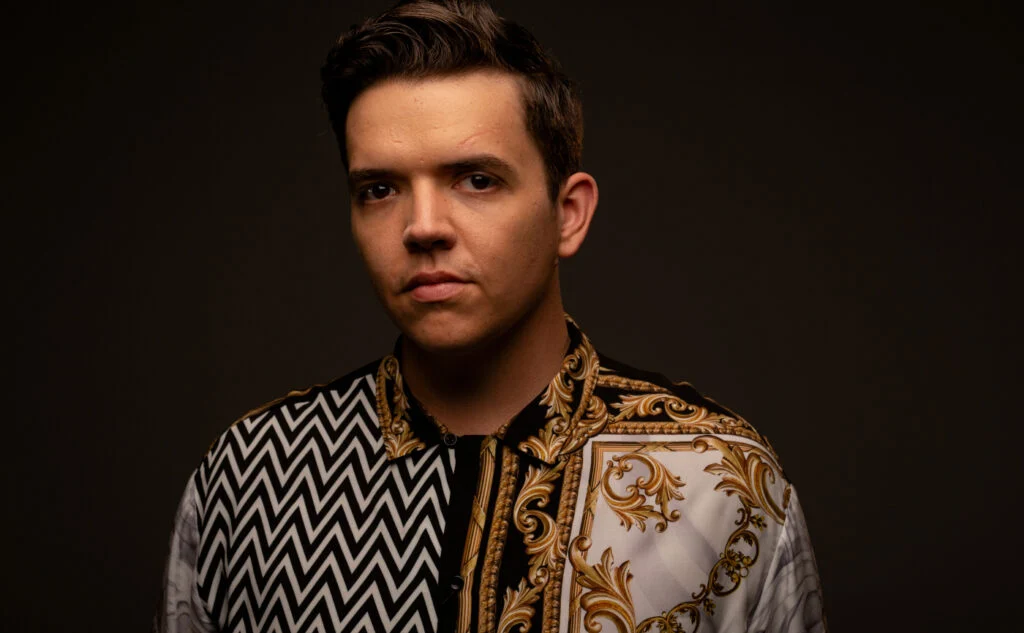
Jason Hawk: A Life Forged in Fire, Steel, and Survival
The morning he chose his name tells you everything. His father had jumped out of enough planes that he’d earned a new identity — Jim Baldwin became Jim Hawk somewhere between the freefall and the landing. When his son grew up, he made the same choice. Not out of rebellion, but out of inheritance. The name Hawk wasn’t given. It was earned, passed down, and claimed. That’s the whole philosophy of the man in one small story.
Quick Facts
| Detail | Info |
|---|---|
| Born Name | Patrick Baldwin |
| Known As | Jason Hawk |
| Born | June 1975, Fort Smith, Arkansas |
| Died | January 28, 2025, Arkansas (age 49) |
| Occupation | Master Bladesmith, Survivalist, TV Personality |
| Shows | No Man’s Land (2014), Mountain Men (Seasons 5–9, 2016–2020) |
| Forge | Outlaw Forge Works / Jason Hawk Knives |
| Spouse | Mary Fricchione (m. October 2014) |
| Children | Kamui, River, Madeline |
| Cause of Death | Cancer |
The Boy Who Lost His Brother on the Beach
When Jason was eight years old, his older brother and closest companion, Damon Salvatore, died in an accident on the beach. There are no Hollywood words for that kind of loss at that age. The family carried the weight of it quietly, the way families do when grief is too large to speak aloud.
His parents were Andrea Baldwin, an artist and equine therapist, and Jim Baldwin, a former Army Special Forces instructor who later became a carpenter and artist. Both of them made things with their hands. Both of them told stories. People who knew Jim and Andrea said Jason came by his storytelling skills honestly.
The name Hawk itself started with his father. Jim Baldwin adopted the surname in honor of his years spent skydiving — a name Jason later chose for himself as an adult. That detail matters because it signals something about the family’s philosophy: identity isn’t assigned, it’s built.
After Damon’s death, the family moved to Cuchara, Colorado, where they became caretakers on a large guest ranch called the Yellow Pine. For a grieving boy who loved horses and open country, it was the right medicine at the right time. He didn’t just heal there — he found himself.
The Mountains That Raised Him
At fifteen, Jason and his sister Jordan became licensed wranglers, helping pack elk hunters into the backcountry. Most teenagers were learning to drive. Jason was guiding men with rifles through mountain terrain, cooking camp meals, and sleeping under skies with no electricity for miles.
In the tiny town of Cuchara, he found a crew of friends who shared his love for the history of the American frontier. They spent long winter evenings sewing clothes and crafting gear for reenactments and rendezvous events. This wasn’t cosplay. It was the beginning of a lifelong commitment to the idea that ancient skills are worth keeping alive — not as nostalgia, but as genuine utility.
After high school, he didn’t go to college straight away. He traveled the country for a couple of years, eventually landing in Montana, where he lived remotely in the Bob Marshall Wilderness, coming into town only for work. He was learning something no university could teach: how to read land, weather, and silence.
He eventually studied metalwork formally — he attended Montana State University for welding and metal fabrication, though the specific dates vary across accounts and should be treated as approximate. What’s certain is that by the time he turned his full attention to blades, he already understood fire, metal, and patience at a level most craftsmen spend decades chasing.
The Forge Changes Everything
Some men find their calling in a single moment. For Jason, it accumulated slowly — the ranch campfires, the gear-making winters in Colorado, the time at a bronze foundry in Arizona — until one day he picked up a hammer and realized he’d already been preparing for this his whole life.
He was mentored by Tai Goo, founder of Neo-Tribal Metalsmiths, and eventually earned the title of Master Smith. Goo is a legend in bladesmith circles, a craftsman who began his metalsmithing career in 1978 and built a philosophy around function, tradition, and the honest beauty of imperfection. Being taken on by Goo wasn’t a credential. It was a consecration.
Jason refused to use oil-derivative products as fuel, relying instead on naturally harvested wood charcoal. That wasn’t a marketing angle. It was a principle. Every choice in his workshop connected back to the land — materials scavenged, techniques inherited, results built to last decades.
He established Outlaw Forge Works, selling hand-forged knives and tools through his own website, with products deeply influenced by history and function. His personal philosophy captured the aesthetic precisely: making goods that have an aged look, built to stand up to daily life — the result of elbow grease, backwoods alchemy, and mountain ingenuity.
He was also a fighter — literally. Jason earned a fifth-degree black belt in Doce Pares Eskrima under Grandmaster Christopher Petrelli. Filipino stick-and-blade martial arts. Practical, efficient, no wasted movement. Exactly his kind of discipline.
A Television Career Born in the Desert
In 2012, Jason drove to Idaho to teach at Woodsmoke, a primitive skills gathering. He wasn’t looking for a television deal. There, he interviewed with a production company for Mountain Men on History Channel. They came to Arizona to film a season of him hunting, trapping, and moving through the desert. But the desert landscape lacked the snowy scenes the show needed elsewhere, and that footage never aired.
History Channel didn’t forget him. They built a show called No Man’s Land around him and a handful of other desert-dwelling characters, which aired in 2014 for one season. The show didn’t find its audience. Jason’s screen presence, however, was undeniable.
After leaving the Arizona desert for the Ozarks, he joined Mountain Men in Season 5 in 2016. The network offered to move his family anywhere in the country. He chose Arkansas — family roots, hunting rights, year-round resources. They filmed near the White River outside Elkins, on a 600-acre property with an 1800s off-grid cabin and a hand-dug well.
He brought a unique voice to a show previously dominated by frozen wilderness survival. His segments focused on craftsmanship and the maker aesthetic rather than just trapping and hunting. Viewers who’d never picked up a hammer suddenly wanted to know how a blade gets made. That’s a specific kind of teaching talent.
He remained on Mountain Men through Season 9, appearing in dozens of episodes and becoming one of the show’s most recognized faces. His son Kamui appeared alongside him. His daughter River learned to hunt on camera. The forge wasn’t just his business. It was the family’s classroom.
Love, Family, and the Weight of Three Marriages
Jason’s personal life had its own complicated geography. He married three times. The details of his first marriage are not publicly documented with clarity, and the circumstances around it are largely unknown.
His second wife was Ikuko Watanabe, a Japanese exchange student studying at Northern Arizona University. In 2005, they had a son, Kamui. The relationship ended, though Jason remained deeply present in his son’s life. Kamui would later appear on Mountain Men and go on to carry his father’s forge into the next generation.
Jason met Mary Fricchione around a campfire after teaching at Winter Count, a primitive skills gathering. That setting wasn’t accidental. The people who show up at Winter Count do so because they believe in learning old things with their hands. Mary was one of them.
Their daughter River was born December 29, 2008. The family eventually moved to Mary’s family land in Arivaca, Arizona, establishing a workspace for both Jason and his father. They officially married in October 2014. Their youngest daughter, Madeline, was born in 2017 — reportedly during filming for the show, which was exactly the kind of life they lived: no separation between the private and the elemental.
The Diagnosis, the GoFundMe, and the Silence of the System
After a year of working through persistent pain, Jason finally went to a doctor. Months of tests confirmed a malignant tumor. The cancer was advanced but isolated, had not yet spread.
He was forty-five.
His wife Mary confirmed publicly that their contract with History Channel was not renewed following the diagnosis. The show that had been the family’s primary income disappeared at precisely the worst moment. The family launched a GoFundMe with a goal of $130,000, reflecting their lack of comprehensive health insurance and the staggering cost of oncological care.
Ultimately, between $36,000 and $46,000 of that goal was raised — sources vary slightly on the final figure. Fans sent amounts ranging from fifty to two thousand dollars, often leaving notes referencing specific episodes, specific blades, specific moments they’d watched from their living room couch. The connection was real. But it wasn’t enough to cover the bills.
Mary wrote publicly: “We have always found ways to be self-reliant and provide for our family. My husband’s diagnosis of cancer at age 45 has been a humbling experience, creating the realization that we can’t do this alone.” That sentence — from a woman whose family had built a life around radical independence — is one of the most honest things anyone connected to that show ever said on record.
In July 2024, Jason was hospitalized in Fort Smith, Arkansas, presenting with severe dehydration, dizziness, and significant weight loss. A CT scan revealed the cancer had spread. By fall of that year, Mary confirmed Jason was no longer eligible for genetic treatments that might have offered a cure. His oncology team offered palliative chemotherapy, but Jason chose not to pursue it, prioritizing quality of life over prolonged suffering. He enrolled in home hospice care. When he had a good day, he walked to the shop and worked on knives.
By December 2024, a sharp decline had set in. The cancer had metastasized to his lungs, abdomen, liver, and lymph nodes. He couldn’t stand for more than a minute.
Controversies: What the Record Shows
There are no scandals in Jason Hawk’s story — no arrests, no public feuds, no ethical violations. The controversy here is systemic, not personal.
History Channel did not renew Jason’s contract after his cancer diagnosis, cutting off the family’s only stable income at the moment they needed it most. Whether that decision was driven by insurance liability, production practicality, or something else entirely, the network never addressed it publicly. What’s documented is the timing. And the timing was devastating.
There was also significant online confusion in 2021 when a different man named Jason Alan Hawk died in Ohio, leading fans to flood the wrong obituary with condolences meant for the Mountain Men star. The internet’s grief engine, moving faster than facts, attached the wrong death to the wrong man. The real Jason Hawk was still alive and fighting, his family watching strangers mourn him prematurely.
There’s also a notable discrepancy in the public record regarding Jason’s birth year — various sources claim 1963, 1975, or 1979. Based on family-written obituary material, which places his age at 49 at the time of his January 2025 death, the 1975 birth year appears most reliable. Any source claiming 1963 is almost certainly inaccurate.
The Last Year, and the Last Wish
His final wish wasn’t about fame or fanfare. It was about togetherness. Mary organized a memorial in accordance with that wish: a gathering under the stars, beside a fire, with the people who had actually known him.
Jason Hawk passed away on January 28, 2025, at his Arkansas home, surrounded by family and loved ones. He remained mentally present and committed to his artistry until the very end.
Mary wrote in her tribute: “He was my best friend, love of my life, business partner, teacher, father to our children, counselor, hunting buddy, and partner in crime. He will be sorely missed in each moment, even though he’s still giving me advice with each step I take.”
That last line. Still giving me advice. That’s what it looks like when someone actually taught you things. Not inspiration. Instructions.
Conclusion
Jason’s son Kamui has taken up the work at Outlaw Forge Works, continuing the blade-making tradition his father taught him. The forge didn’t close. It transferred.
Jason Hawk never won a reality television award. He never had a viral moment. He didn’t write a book or launch a brand extension. What he did was quieter and harder to measure: he showed up, on screen and off, as a man who genuinely knew how to make things and genuinely wanted to pass that knowledge forward.
He described himself as “consumed by creation of functional works” — a man who said his craft was what kept him grounded in a hectic world. That’s not a soundbite crafted for cameras. It’s a daily orientation toward meaning that most people spend their whole lives searching for.
He also taught — at Winter Count, at Woodsmoke, at primitive skills gatherings across the country — building communities of people who believe that knowing how to feed yourself, protect yourself, and make things with your hands is not nostalgia but necessity.
His son Kamui once said of learning to smith: “I haven’t had much experience with smithing so far, but I am excited to learn and carry on the tradition.” And Jason’s answer was the most Hawk thing he ever said: “We’re not trying to recreate a tradition; we’re trying to start one.”
You may also like Jonathan Taylor Thomas Wife
Frequently Asked Questions
Who was Jason Hawk?
Jason Hawk — born Patrick Baldwin — was an American master bladesmith, survivalist, and reality television personality best known for his role on History Channel’s Mountain Men, where he appeared from 2016 through 2020.
What was Jason Hawk’s real name?
His birth name was Patrick Baldwin. He adopted the surname Hawk as an adult, following his father Jim Baldwin, who had taken the name in tribute to his years spent skydiving.
When did Jason Hawk die?
Jason Hawk died on January 28, 2025, at his home in Arkansas, at age 49. His death was confirmed by his wife Mary Fricchione.
What did Jason Hawk die of?
He died of cancer. He was diagnosed in late 2020 with a malignant tumor. By late 2024, the cancer had spread to his lungs, liver, abdomen, and lymph nodes.
What seasons of Mountain Men was Jason Hawk on?
Jason Hawk appeared on Mountain Men from Season 5 through Season 9, approximately 2016 to 2020.
Was Jason Hawk on any other shows?
Yes. He appeared on No Man’s Land, a one-season History Channel series that aired in 2014, which followed people living in remote desert locations.
Who is Jason Hawk’s wife? His wife is Mary Fricchione, whom he met around 2007 at a primitive skills gathering called Winter Count. They married in October 2014.
How many children did Jason Hawk have?
Three: son Kamui, born approximately 2005 from a previous relationship, and daughters River, born December 2008, and Madeline, born in 2017.
What is Outlaw Forge Works?
It’s the bladesmith business Jason established, operating under the name Jason Hawk Knives. His son Kamui continues to run it following Jason’s death.
Why did Jason Hawk leave Mountain Men?
His contract was not renewed by History Channel in 2020, following his cancer diagnosis. His wife confirmed this publicly. He did not leave voluntarily.
Did Jason Hawk’s GoFundMe reach its goal?
No. The campaign aimed to raise $130,000 for medical and living expenses. It raised between $36,000 and $46,000, depending on the source.
What martial art did Jason Hawk practice?
He earned a fifth-degree black belt in Doce Pares Eskrima, a Filipino martial art, under Grandmaster Christopher Petrelli.
Who was Jason Hawk’s mentor in blacksmithing?
Tai Goo, founder of Neo-Tribal Metalsmiths and a legendary figure in American bladesmithing. Under Goo’s mentorship, Jason earned the rank of Master Smith.
Is Outlaw Forge Works still operating?
Yes. Jason’s son Kamui has taken over the forge and continues his father’s craft.
What is Jason Hawk’s legacy?
Beyond television, Jason’s legacy lives in the skills he taught at primitive skills gatherings, the blades his son now forges, and a quiet insistence that making things with your hands — really making them, from fire and raw material — is worth a human life’s full devotion.