Brian Cohee: I’ve Always Wondered What Murder Felt Like — The Case
The man he killed had a catchphrase. Every morning, when the downtown shop owners of Grand Junction, Colorado passed him on their way in, they’d say “Have a good day,” and Warren Barnes would look up from his paperback and say, “And you also.” Every single time. He shared his Subway sandwiches with the birds that gathered around his boots. He never asked anyone for anything. He called his sister on her birthday, February 26, 2021. He was murdered the following day.
Quick Bio
| Detail | Info |
|---|---|
| Full Name | Brian Thomas Cohee Jr. (also listed as Brian Cohee II) |
| Born | January 10, 2002, Colorado, USA |
| Age at Time of Murder | 19 years old |
| Parents | Brian Cohee Sr. (father), Terri Cohee (mother) |
| Diagnoses | ADHD (age 5), Major Depressive Disorder (2018), Autism Level 1 (2019) |
| Victim | Warren Bruce Barnes, 69, Grand Junction, Colorado |
| Date of Murder | February 27, 2021 |
| Arrested | March 1, 2021 |
| Trial | January 17 – February 3, 2023 (12-day trial, Mesa County) |
| Verdict | Guilty — first-degree murder, two counts of tampering with a deceased human body, tampering with evidence |
| Sentence | Life in prison without possibility of parole, plus 13.5 additional years |
| Presiding Judge | Richard Gurley, 21st Judicial District |
| Current Location | Buena Vista Correctional Facility, Buena Vista, Colorado |
Where He Came From
Grand Junction sits on Colorado’s Western Slope, a working city ringed by desert red rock and mesa country, about as far from the mountain resort image of Colorado as you can get. It’s a place with oil and gas money, ranching history, and a downtown core where people actually know each other. Brian Cohee grew up there, the son of Brian Sr. and Terri Cohee, in a household that, by all accounts, was not neglectful.
His mother described a boy she loved deeply and worried about constantly. The diagnoses started early. At age five, doctors identified ADHD. By 2018, when Cohee was 15 and seeing family doctor Craig Gustason, he received a depression diagnosis and began treatment. A year later, a vocational rehabilitation assessment produced a Level 1 autism diagnosis — the lowest severity classification, meaning least support required — after an evaluation by Dr. Katrina Katen.
But what that assessment also revealed was something harder to categorize. When Dr. Katen asked Cohee about his future goals and the kind of people he admired, he named Adolf Hitler, the Columbine shooters Eric Harris and Dylan Klebold, Ted Bundy, and Joseph Stalin. She recommended immediate further evaluation. The referral was made. Whether that evaluation fully happened, and what it concluded, isn’t entirely clear from the available court record.
His nickname in middle school was “Dahmer.” His classmates gave it to him.
The Warning Signs Nobody Stopped
A 2017 counseling relationship with therapist Bea Phillips left a documented paper trail that the trial would later bring to light. Over 24 sessions, Cohee made remarks that ranged from disturbing to alarming — referring to transgender individuals with dehumanizing language, questioning why hurting or stealing from others was considered wrong, and deliberately bullying a young girl to trigger her PTSD just to observe the effect. Phillips concluded that Cohee knew right from wrong at the time. She kept seeing him.
In 2018, Cohee killed a cat and kept its severed head in his bedroom for three days before discarding it. This is a documented escalation pattern that criminologists and forensic psychologists consistently identify as a serious red flag — the MacDonald Triad, the rough framework for predatory violence risk, includes animal cruelty as a primary indicator. Whether this incident prompted any clinical intervention beyond what was already in place isn’t documented in available sources.
By early 2021, a coworker at the Safeway where Cohee worked noticed he was becoming more talkative and more isolated at the same time. He told her he had no friends. She tried to reassure him that she and her colleagues were his friends. He replied that they were only his friends out of pity. He wasn’t asking for sympathy. He was making an observation.
In the months before February 27, 2021, Cohee had assembled a kit: a 12-inch kitchen knife, three pairs of plastic gloves, and whatever else he needed. He drove around the city at night, circling homeless encampments, looking for the right person. He kept records. The night he killed Warren Barnes, he entered a single word in his phone’s notes: “1st.”
The Night of February 27, 2021
Warren Barnes was sleeping near railway tracks under a highway overpass on the edge of downtown Grand Junction, close to Crosby Avenue, on a cold Colorado winter night. He was 69 years old, homeless by choice rather than crisis, and well known to the business owners along Main Street who regularly brought him books, food, and coffee.
Cohee spotted him from his car. He pulled over, pulled on all three layers of gloves, took out the knife, and walked over to the sleeping man. Barnes woke up during the attack. According to Cohee’s own confession, Barnes cried out, “What are you doing, why, why?” before he died. Cohee described himself in interrogation as making animalistic noises during the killing. He said he found it exhilarating.
He stabbed Barnes more than 40 times. He then dismembered the body — removing the hands and the head — placed them in plastic bags, and drove them home. He put them in his closet. He cleaned the knife and cleaned his car. Then he went to sleep.
Two days later, he drove back to the scene, collected the remaining body parts, loaded them into the trunk of his car, and drove to the Colorado River with the intention of submerging the vehicle to destroy evidence. The car flooded. Police arrived to tow it. They let him leave. On the way out, they noticed what appeared to be a reddish liquid at the rear of the trunk. They didn’t stop him.
On March 1, 2021, Terri Cohee found what was in her son’s closet.
The Arrest and What Cohee Said

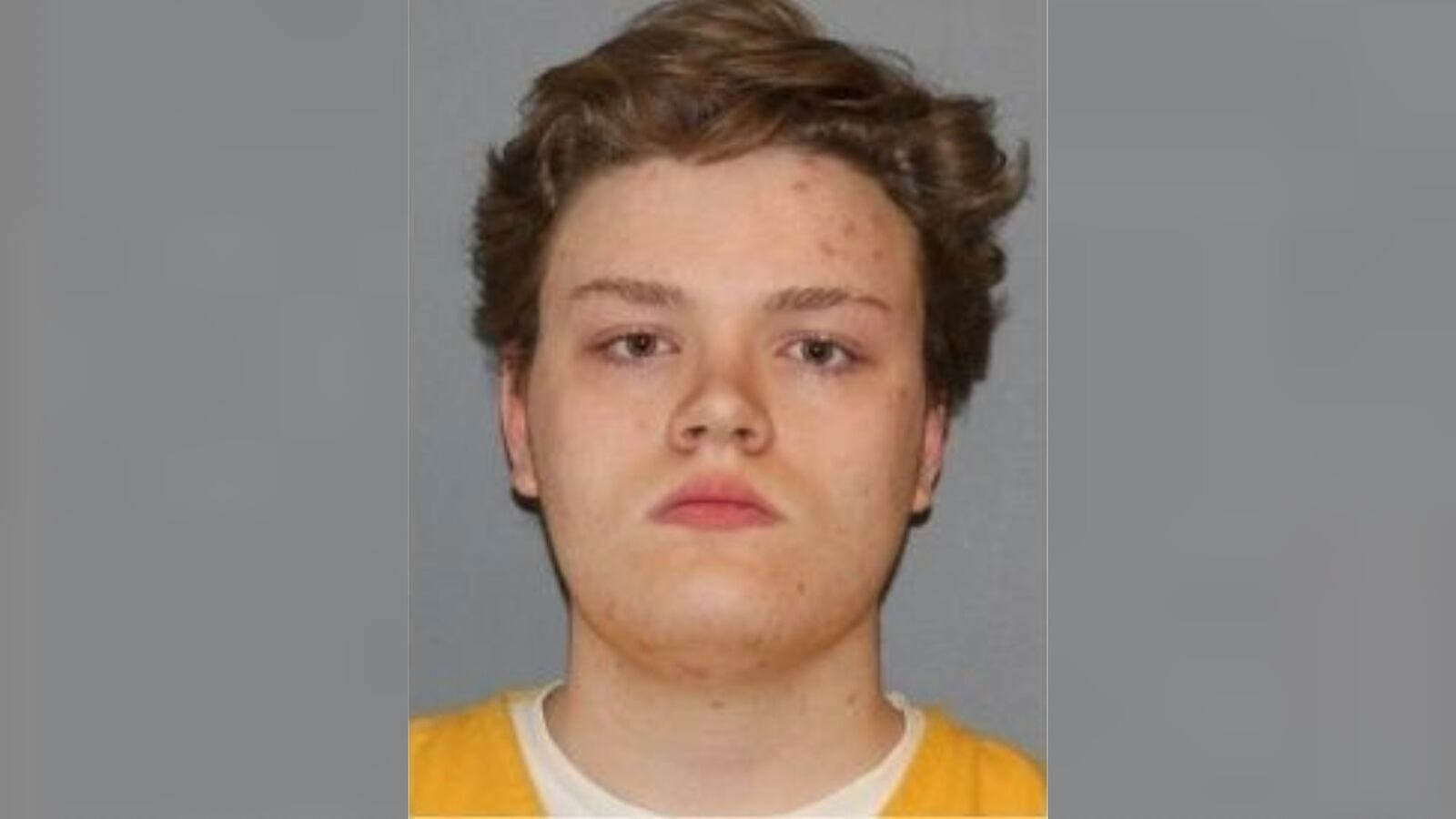
When police arrived at the Cohee family home that afternoon, Brian Cohee walked toward them before they could speak. He didn’t wait to be asked. He said: “I’ve always wondered what murder felt like.”
He told them the victim’s name. He told them the weapon. He told them where it happened. In the subsequent interrogation, he was calm, detailed, and cooperative. Forensic psychologist Dr. Laura Serrano-Amerigo later testified that Cohee displayed no signs of psychosis at any point before, during, or after the crime — not during the killing, not during his attempts to conceal it, and not during his voluntary confession. He knew where he was. He knew what he’d done. He knew why he was talking to police.
He compared himself to serial killer Edmund Kemper. He said he had targeted a homeless person because he assumed no one would notice their absence. He was wrong about that in every possible way.
The Trial: January–February 2023
Cohee’s trial opened on January 17, 2023, in Mesa County and ran for 12 days. He pleaded not guilty by reason of insanity — a legal standard in Colorado requiring that a defendant be incapable of distinguishing right from wrong at the time of the crime due to a mental disease or defect.
The defense’s case rested on Cohee’s documented psychiatric history. Defense psychologist Dr. Paul Spragg testified that Cohee had been experiencing a major depressive episode with psychotic features triggered by seeing Barnes, and that this episode rendered him legally insane at the moment of the attack. The argument had a certain internal logic: a young man with multiple serious diagnoses, a documented history of violent ideation, and a fascination with serial killers crossed into something irreversible when confronted with a sleeping figure under an overpass.
The prosecution dismantled it methodically. The planning was the problem. Cohee had assembled the murder kit months before that night. He had been surveilling homeless people for weeks. He had deleted photographs of the victim from his phone because, in his own words, “they were evidence.” He had driven back to the crime scene to collect additional remains. Every single one of those actions required understanding consequences — and understanding that what he had done was wrong in the eyes of the law, even if he didn’t accept it as wrong in his own mind.
Two state psychologists concluded he was not legally insane. Dr. Serrano-Amerigo’s testimony, that Cohee showed no psychosis before, during, or after the crime, was particularly damaging to the defense. After two days of deliberation, the jury found him guilty on all three charges.
The Sentencing Hearing
On February 6, 2023, more than 30 people — friends, family members, and community members who had known Warren Barnes — filed into Courtroom 11 at the Mesa County Justice Center. They came to be counted. To say his name. To make sure the record showed that a homeless man who never bothered anyone and said “and you also” every morning was not forgettable.
Geraldine Shipp, one of Barnes’s eight siblings, told the court she still had nightmares. She had spoken to her brother on the phone the day before he was killed. He had called to wish her a happy birthday. Barnes’s cousin Joanne Barnes Graham said he would have helped anyone who needed anything — including the man who killed him. Barnes’s friend, the woman who had photographed him absorbed in a book outside Monique’s Bridal, said she would never again hear him say “and you also” after she told him good morning.
Terri Cohee stood and addressed the court. She said she had spent two years crying for Warren Barnes and his family. She said her son had always known he was not like other people, had struggled his whole life with his emotions, did not think and feel the way others do. She asked that his sentence include mental health treatment. She said he was not the sum of his actions.
Brian Cohee declined to speak.
Judge Richard Gurley, who had spent 37 years in the Colorado justice system, said this was one of the most horrific cases he had ever encountered. He sentenced Cohee to life in prison without possibility of parole for the murder, plus concurrent 12-year sentences for two counts of tampering with a deceased body, and a consecutive 18 months for evidence tampering — a total of life plus 13.5 years.
Cohee sat stone-faced throughout. Observers reported he had been smiling and relaxed before the verdict was read two days earlier.
Who Warren Barnes Actually Was

The case generated significant media attention in 2021 and again during the 2023 trial, and much of that coverage centered on Cohee. That’s the wrong emphasis. Warren Barnes deserves more than a paragraph.
He was 69 years old, one of eight siblings, a man described uniformly by everyone who knew him as gentle, kind, and quietly industrious. He did odd jobs through a temp agency, helped shop owners move boxes, and spent his days reading outside the bridal store on Main Street. He didn’t beg. He didn’t hassle anyone. He received the small gifts people brought him — sandwiches, books, coffee — with genuine gratitude and passed what he could along to others.
He was not living outside because he had no options. He was living the life he had chosen. The business owners and residents who knew him didn’t view him as a problem to be solved. They viewed him as a neighbor.
In November 2021, ironworker and artist Tim Navin installed a metal memorial statue of Barnes in the breezeway between Out West Books and Monique’s Bridal — the place where Barnes spent so many of his days. The statue includes a book inscribed with his phrase: “And you also.” The memorial wasn’t placed where he was murdered. It was placed where he lived and was known and loved.
That’s the distinction his community made deliberately.
Current Status
As of 2025, Brian Cohee is incarcerated at the Buena Vista Correctional Facility in Buena Vista, Colorado. He is 23 years old. He will spend the rest of his natural life there.
No further public statements from Cohee have been reported since his sentencing hearing, at which he chose not to speak. His mother Terri expressed hope on the day of the verdict that her son might still affect society positively someday. The sentence makes that possibility extraordinarily narrow.
The case gained renewed public attention after the YouTube channel EXPLORE WITH US released a documentary titled “Parents Discover Teen Son’s Horrifying Secret,” which drew over 11 million views and included police body camera footage from the arrest. The viral attention reignited coverage of both the crime and the memorial for Barnes.
What This Case Leaves Behind
The legacy here doesn’t belong to Brian Cohee. It belongs to Warren Barnes, and to the people of Grand Junction who refused to let the world forget that a homeless man was not an invisible target.
The case raises questions that the verdict didn’t fully answer. Multiple mental health professionals saw Cohee over several years, noted serious warning signs, and recommended further evaluation. At what point does documented ideation about violence — in session notes, in counseling records, in a vocational assessment — become sufficient to intervene? Colorado, like most states, has no clean answer.
The jury decided that Cohee understood what he was doing. The law required that conclusion to assign legal accountability. But the family doctor who examined him two days before the murder and found no psychosis, the therapist who heard him discuss the logic of hurting people, and the counselors who documented his admiration for mass killers — they were all working within a system that has limited tools for the specific kind of person Brian Cohee appeared to be.
Judge Gurley noted that the crime affected innocent third parties beyond Barnes and Cohee — the families of both men, a community that trusted its streets to be safe, and a mother who found something in her son’s closet that no parent should ever find.
Warren Barnes called his sister on her birthday. He told her to have a good day. She said she still hears his voice.
You may also like Jonathan Taylor Thomas Wife
FAQ
1. Who is Brian Cohee?
Brian Thomas Cohee Jr., born January 10, 2002, is a convicted murderer from Grand Junction, Colorado. In February 2021, at age 19, he murdered 69-year-old homeless man Warren Barnes. He was convicted of first-degree murder in February 2023 and sentenced to life in prison without parole.
2. Who was Warren Barnes?
Warren Bruce Barnes was a 69-year-old Grand Junction resident known to the downtown community as “The Reading Man.” He was homeless by choice, helped local business owners with odd jobs, and spent his days reading outside a bridal shop on Main Street. He was beloved by the community that knew him.
3. Why did Brian Cohee kill Warren Barnes?
Cohee told investigators he had been planning to kill someone for months, motivated by a desire to experience what taking a life felt like. He specifically targeted a homeless person because he believed no one would report them missing or care about their disappearance. He was wrong on both counts.
4. How was Brian Cohee caught?
His mother, Terri Cohee, discovered decomposing human remains — Warren Barnes’s severed head and hands — in a bag inside her son’s closet on March 1, 2021. She called 911. When police arrived, Cohee walked toward them and confessed before they could say a word.
5. What mental health conditions did Brian Cohee have?
He was diagnosed with ADHD at age five, major depressive disorder in 2018, and Level 1 autism spectrum disorder in 2019. During trial, the defense also argued he experienced a major depressive episode with psychotic features at the time of the murder.
6. Was Brian Cohee found legally insane?
No. He pleaded not guilty by reason of insanity. After a 12-day trial and two days of jury deliberation, he was found guilty on all charges. Two state psychologists concluded he was not legally insane and understood right from wrong at the time of the murder.
7. What was Brian Cohee’s sentence?
Life in prison without the possibility of parole for first-degree murder, plus concurrent 12-year sentences for two counts of tampering with a deceased human body, and a consecutive 18-month sentence for tampering with evidence — totaling life plus 13.5 years.
8. Where is Brian Cohee now?
As of 2025, he is incarcerated at the Buena Vista Correctional Facility in Buena Vista, Colorado.
9. What did Judge Gurley say at sentencing? Judge Richard Gurley, who had served 37 years in the Colorado justice system, described the Cohee case as one of the most horrific he had ever encountered. He sentenced Cohee to the mandatory life term and noted the crime’s impact on innocent parties including both families and the broader community.
10. Is there a memorial for Warren Barnes?
Yes. In November 2021, artist and ironworker Tim Navin created a metal memorial statue of Barnes, installed in the breezeway between Out West Books and Monique’s Bridal on Main Street in Grand Junction — the place where Barnes spent most of his days. The statue includes a book inscribed with Barnes’s phrase: “And you also.”
11. What was Brian Cohee’s nickname in school?
His peers gave him the nickname “Dahmer” in middle school, after serial killer Jeffrey Dahmer, due to his documented fascination with death and serial killers.
12. Did Cohee have prior criminal history?
No adult criminal record has been reported prior to the Barnes murder. However, documented behavior prior to the crime included killing a cat in 2018 and making statements about violence and harming others to his therapist and during a vocational assessment in 2019.
13. What was the YouTube documentary about the case?
The channel EXPLORE WITH US released a documentary titled “Parents Discover Teen Son’s Horrifying Secret” that drew over 11 million views. It included police body camera footage from the time of Cohee’s arrest and helped bring renewed national attention to the case and Warren Barnes’s story.